
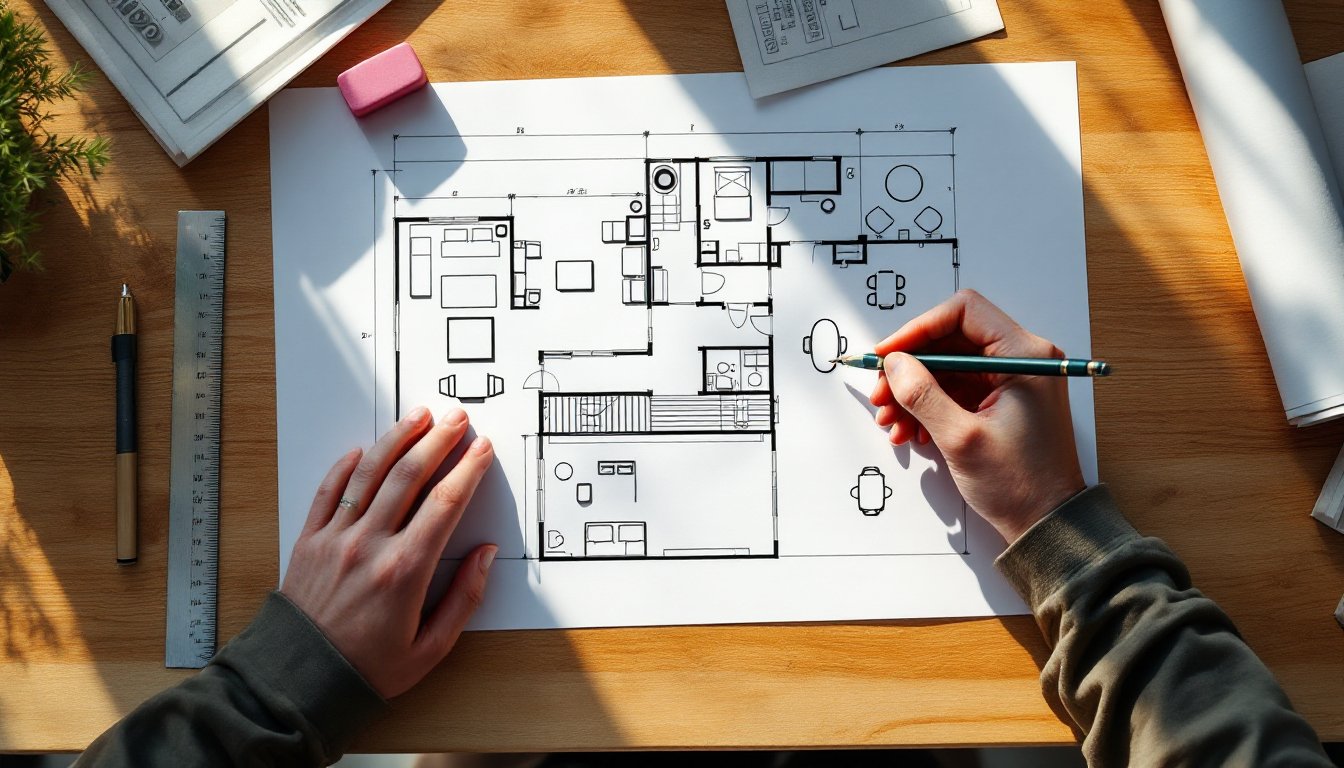
Ever stared at a floor plan or design drawing and felt like you’re deciphering hieroglyphics? Those cryptic lines, arcs, and shapes aren’t there to confuse, they’re a universal language that architects, designers, contractors, and DIYers use to communicate spatial layouts, fixture placement, and system routes. Understanding interior design symbols transforms guesswork into precision. Whether planning a kitchen remodel, mapping out furniture before moving day, or reviewing contractor plans, knowing how to read these symbols saves time, prevents costly mistakes, and puts homeowners in control of their projects.
Key Takeaways
- Interior design symbols are standardized graphic representations that function as a universal shorthand for architects, designers, and homeowners to communicate spatial layouts, fixture placement, and system routes accurately.
- Understanding architectural symbols like wall thickness variations, door swing arcs, and window representations prevents costly mistakes such as load-bearing wall removal or door swings that block furniture placement.
- Electrical symbols including outlet circles, switch indicators, and lighting fixture markers are critical to learn before any wiring project to ensure proper outlet placement and code compliance with NEC standards.
- Furniture and fixture symbols scaled to actual dimensions on graph paper help DIYers visualize realistic room layouts and avoid purchasing pieces that overwhelm spaces or violate building codes.
- Obtaining accurate existing floor plans from county assessor offices or through personal measurement, then overlaying proposed changes with standard interior design symbols, ensures contractor communication is clear and project scope is precise.
- Any project involving moving walls, adding electrical circuits, or altering plumbing requires plans using standardized symbols and often a licensed professional’s stamp to meet local building department permit requirements.
What Are Interior Design Symbols and Why Do They Matter?
Interior design symbols are standardized graphic representations used on floor plans, elevations, and construction drawings to depict walls, doors, windows, fixtures, electrical components, and furniture. They function like a shorthand that conveys spatial relationships and technical details without cluttering a drawing with excessive text.
These symbols follow conventions established by organizations like the American Institute of Architects (AIA) and the International Building Code (IBC), though minor variations exist between design software and regional practices. A solid thick line typically represents a load-bearing wall, while a thinner line might indicate a partition. A quarter-circle arc shows a door’s swing path. Dashed lines often denote features above the cut plane, like upper cabinets or changes in ceiling height.
For homeowners tackling renovations, these symbols matter because they’re the blueprint for communication. Misreading a wall as non-load-bearing when it actually supports floor joists above can lead to structural damage and expensive repairs. Misunderstanding electrical symbols might result in outlets placed where furniture will block them. Reading plans accurately helps catch errors before demo day, ensures permit drawings match the homeowner’s vision, and makes conversations with contractors more productive.
Essential Architectural Symbols Every Homeowner Should Know
Walls, Doors, and Windows
Walls appear as parallel lines on a floor plan. Exterior walls are typically drawn thicker (often 5–6 inches for wood-frame construction, representing a 2×4 or 2×6 stud wall plus sheathing and finishes). Interior partition walls are thinner, usually around 4–5 inches. Hatching or solid fill between the lines sometimes indicates masonry or concrete. If a wall has diagonal cross-hatching or notes like “bearing,” it’s load-bearing, never remove or alter these without consulting a structural engineer.
Doors show as a straight line (the door itself) with a quarter-circle arc indicating the swing direction. A 36-inch entry door appears as a line that length, with the arc sweeping into the room. Bifold closet doors use a zigzag or accordion symbol. Pocket doors show a rectangle recessed into the wall, often with dashed lines. Sliding patio doors are drawn as parallel lines in the opening, sometimes with arrows showing the active panel. Always note swing direction, it affects furniture placement and traffic flow. Many kitchen layout mistakes stem from ignoring a door that swings into the workspace.
Windows are represented by parallel lines in the wall thickness with a sill line between them. Double-hung windows might show two horizontal lines: casement windows sometimes include a small hinge symbol. Bay or bow windows project beyond the wall line. When comparing options across platforms like homify.com, notice how designers indicate window placement to maximize natural light.
Other common architectural symbols include stairs (shown with parallel lines and an arrow indicating “up” or “down”), fireplaces (rectangular outlines with a hearth projection), and built-in cabinetry (drawn as rectangular boxes along walls).
Furniture and Fixture Symbols for Room Planning
Furniture symbols are simplified top-down views of common pieces. A sofa appears as a long rectangle with cushion outlines. Dining tables are ovals, circles, or rectangles with chair circles around them. Beds show as rectangles with a pillow end marked. Dressers, nightstands, and desks are drawn to scale as simple rectangles.
Using these symbols to scale prevents the classic DIY mistake: buying a sectional that looked perfect online but physically overwhelms the living room. Standard symbols follow actual dimensions, a queen bed is roughly 60 × 80 inches, a typical three-seat sofa runs 84–90 inches long. When sketching a layout, use graph paper where each square equals 6 or 12 inches, or work in design software that snaps to scale.
Fixture symbols are equally important, especially in kitchens and bathrooms. Sinks appear as ovals or rectangles, sometimes with faucet markers. Toilets are unmistakable rounded shapes. Bathtubs and showers have defined outlines, often with a showerhead dot. Kitchen ranges show burner circles: refrigerators and dishwashers are rectangles labeled or noted.
Door swing conflicts are the top reason furniture plans fail in practice. That 32-inch bedroom door swinging inward might block a nightstand. A bathroom vanity too close to the toilet creates code violations, most jurisdictions require 15 inches of clearance from centerline to any obstruction per IRC standards. Templates for plumbing fixtures also help DIYers visualize rough-in locations before cutting drywall.
Electrical and Lighting Symbols in Design Plans
Electrical symbols communicate outlet locations, switch positions, lighting fixtures, and circuitry. Recognizing these is critical for any project involving wiring, even cosmetic upgrades like accent lighting require understanding what’s already in the walls.
A standard duplex receptacle (outlet) appears as a circle with two parallel lines. A GFCI outlet, required within 6 feet of water sources per NEC code, often has “GF” or extra notation. Switched outlets include a small “S” or connecting line to the switch symbol. The switch symbol itself is an “S” with a line running to the fixture it controls. Three-way switches (used at opposite ends of a hallway or staircase) are marked “S3.”
Ceiling lights are drawn as circles with crosshairs or a solid dot. Recessed cans appear as circles with an “R” or concentric rings. Wall sconces are half-circles attached to a wall line. Ceiling fans combine a circle with radiating blades. Track lighting shows as a dashed line with fixture markers along it.
Understanding these symbols prevents frustrating layout errors. Placing a home office desk where no outlet exists means running extension cords or hiring an electrician later. Planning a gallery wall where a switched sconce already lives requires rerouting wiring. Homeowners comparing design inspiration on sites like decoist.com can better translate those beautiful room photos into realistic electrical requirements.
Safety note: Any work beyond replacing a fixture or device requires understanding local electrical codes. Most jurisdictions require permits for new circuits, junction box installations, or moving outlets. If the plan calls for anything more complex than swapping a light switch, consult a licensed electrician.
How to Use Design Symbols for Your DIY Projects
Start by obtaining accurate existing floor plans. Many county tax assessor offices have as-built drawings on file, though these may be outdated if previous owners did unpermitted work. Alternatively, measure and sketch rooms yourself using a 25-foot tape measure and graph paper. Mark wall thicknesses (typically 4.5 inches for interior, 5.5–6.5 inches for exterior), and note door and window locations with their actual dimensions.
Once the base plan is accurate, overlay proposed changes using tracing paper or design software like SketchUp, RoomSketcher, or even free tools in home improvement apps. Use standard symbols to place new furniture, fixtures, or walls. This helps visualize traffic patterns, designers recommend at least 36 inches of clearance for primary walkways and 24 inches for secondary paths.
For electrical planning, mark existing outlets and switches in one color, then add proposed fixtures and receptacles in another. Count the devices per circuit (most 15-amp bedroom circuits safely handle 8–10 outlets) and identify where new circuits might be needed. This prep work makes contractor bids more accurate and ensures the project scope is clear.
When reviewing contractor-provided plans, cross-reference symbols against the legend (usually in a corner of the drawing). Ask questions if anything’s unclear, pros sometimes use firm-specific shorthand. Verify that rustic design elements like exposed beams or reclaimed wood features are noted if applicable, and that electrical symbols match the style of lighting planned (e.g., pendant fixtures in a kitchen island vs. recessed cans).
For more complex layouts, browsing room plans on platforms like homedit.com provides real-world examples of symbol usage in finished projects. Study how designers handle tricky spaces, corner sinks, angled walls, or furniture around structural columns.
Permit reminder: If the project involves moving walls, adding circuits, or altering plumbing, check local building department requirements. Plans submitted for permits must use standardized symbols and often require a licensed professional’s stamp.
Conclusion
Mastering interior design symbols turns abstract drawings into actionable blueprints. Homeowners who can read floor plans confidently catch design flaws early, communicate clearly with contractors, and execute DIY layouts that actually work in three-dimensional space. These symbols aren’t just for professionals, they’re tools that put anyone in the driver’s seat of their home projects.