
Opening a beauty salon isn’t just about skill with scissors or color, it’s about creating a space where clients feel confident, relaxed, and eager to return. Interior design directly impacts client retention, pricing power, and word-of-mouth referrals. Whether renovating an existing salon or building from scratch, the right layout, lighting, and finishes can transform a basic service space into a destination. This guide walks through the essential design decisions that matter most, from traffic flow to color psychology, with practical DIY options for salon owners working within tight budgets.
Key Takeaways
- Beauty salon interior design directly impacts client retention, pricing power, and word-of-mouth referrals—salons with intentional design can command 15–25% higher service fees than competitors in generic spaces.
- Strategic layout and layered lighting are essential foundations for a successful salon; combine ambient, task, and accent lighting with CRI 90+ accuracy to ensure stylists work effectively and clients feel flattered.
- Smart zoning that separates loud services from quiet areas, maintains ADA-compliant spacing of 48 inches between stations, and positions reception and retail for client flow creates operational efficiency and reduces staff fatigue.
- Color schemes using warm neutrals as backdrops with carefully placed accent colors in replaceable elements like paint, cushions, or tile creates a cohesive aesthetic that photographs well without dating quickly.
- DIY design upgrades—including fresh paint, peel-and-stick backsplash, floating shelves, and statement mirrors—deliver high visual impact at low cost while hiring professionals for permits-required work like electrical and plumbing.
- Flooring choices like luxury vinyl plank (LVP) offer practical durability and warmth, while thoughtful details like low-maintenance greenery and quality mirrors transform a basic space into a destination clients want to return to.
Why Interior Design Matters for Your Beauty Salon
A well-designed salon does three things simultaneously: it attracts new clients, justifies premium pricing, and makes daily operations smoother for staff.
First impressions form in under seven seconds. A cohesive design signals professionalism before a stylist touches a single strand. Clients equate visual quality with service quality, outdated popcorn ceilings, mismatched furniture, or harsh fluorescent lighting all suggest the business hasn’t kept pace with modern standards.
Pricing psychology shifts with environment. Salons with intentional design, crisp paint, coordinated fixtures, comfortable seating, can command 15-25% higher service fees than functionally identical competitors in generic spaces. Clients paying $150 for balayage expect an experience, not just chemistry.
Operational efficiency matters just as much. Poor layout creates bottlenecks during rush hours. Stylists waste steps shuttling between poorly placed sinks and stations. Inadequate storage leaves product clutter on counters. Good design solves these problems upfront, reducing staff fatigue and turnover.
Retention depends on comfort. If the shampoo chair pinches shoulders or the waiting area feels cramped, clients remember the discomfort more than the cut. Repeat business, the lifeblood of any salon, hinges on making every touchpoint feel deliberate and pleasant.
Essential Design Elements Every Beauty Salon Needs
Strategic Layout and Flow Planning
Layout determines whether a salon feels spacious or chaotic. Start by mapping client movement from entry to exit: reception → waiting area → service station → shampoo bowl → checkout. Minimize backtracking and cross-traffic.
Zoning by noise and privacy keeps incompatible activities separate. Place loud blow-dryers away from quiet manicure stations. If offering waxing or facials, isolate those services behind partial walls or curtains, not full floor-to-ceiling partitions, which require permits and HVAC modifications in most jurisdictions.
Station spacing follows ADA and local fire codes. Allow 48 inches minimum between facing stations for wheelchair clearance and comfortable stylist movement. Tighter spacing feels efficient on paper but creates elbow-clashing and client anxiety.
Plumbing location dictates shampoo bowl placement. Moving water and drain lines costs $1,500–$4,000 per station depending on slab vs. crawlspace access. If renovating, work with existing plumbing locations unless the layout gain justifies the expense.
Reception and retail should occupy the first and last zones clients encounter. Position retail shelving along the path to service stations and again near checkout. Impulse purchases happen when products are visible and accessible, not tucked in a back corner.
Lighting That Flatters and Functions
Lighting makes or breaks color work. Stylists need accurate color rendering (CRI 90+) to match tones and catch uneven application. Clients need flattering light that doesn’t wash them out or create harsh shadows.
Layered lighting solves both problems. Combine three types:
- Ambient lighting: Recessed LED downlights (3000K–4000K color temperature) for general illumination. Avoid the blue-white 5000K+ “hospital” tone.
- Task lighting: Adjustable track lights or pendant fixtures positioned 18–24 inches above and slightly in front of styling chairs. This eliminates shadows under the chin and ensures stylists see what they’re cutting.
- Accent lighting: LED strips under shelving, backlit mirrors, or decorative pendants that add visual interest without compromising function.
Avoid relying solely on overhead fluorescents. They create unflattering shadows, and many residential fixtures from big-box stores drawing inspiration from interior design trends don’t meet commercial lumen output needs. Budget $150–$300 per station for quality task lighting plus dimmer controls.
Natural light is an asset but requires control. South- and west-facing windows cause glare and heat gain. Install adjustable blinds or solar shades (not sheer curtains, which diffuse but don’t block). North-facing windows provide consistent, flattering daylight without harsh angles.
Color Schemes and Style Themes That Attract Clients
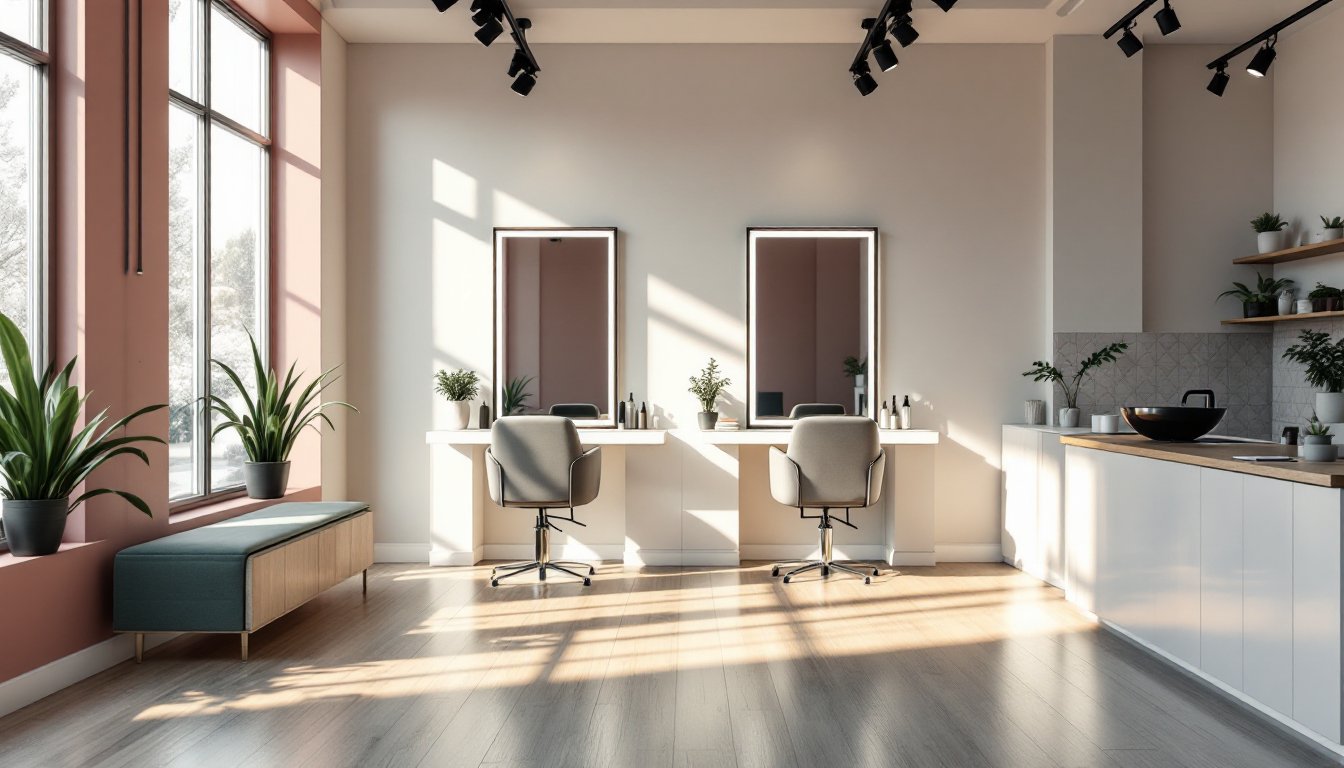
Color psychology directly influences how long clients linger and how much they spend. Warm neutrals, soft grays, beiges, warm whites, create a calm backdrop that doesn’t compete with hair color or makeup application. Accent walls in dusty rose, sage green, or muted terracotta add personality without overwhelming.
Avoid pure white walls in client-facing areas. They reflect too much light, creating glare on screens and mirrors. Instead, use off-whites with warm undertones (Benjamin Moore’s Swiss Coffee or Sherwin-Williams’ Alabaster) that soften reflected light.
Bold accent colors work best in small doses: a feature wall behind reception, colored chairs, or decorative tile in the shampoo area. Trendy palettes (millennial pink, navy and brass, black and gold) photograph well for social media but date quickly. If committing to a strong color, apply it to replaceable elements like cushions, artwork, or paint rather than permanent tile or cabinetry.
Style themes should align with target clientele and service offerings:
- Modern minimalist: Clean lines, floating shelves, monochrome palette. Works for high-end salons offering precision cuts and balayage.
- Bohemian eclectic: Mixed textures, plants, vintage mirrors, layered rugs. Appeals to younger clients seeking Instagram-worthy backdrops.
- Industrial chic: Exposed ductwork (if permitted by code), metal fixtures, concrete or luxury vinyl plank (LVP) flooring. Suits urban locations and edgier branding.
- Classic elegance: Crown molding, upholstered seating, chandeliers. Targets mature clientele expecting traditional luxury.
Whatever theme chosen, carry it through consistently. Mixing farmhouse shiplap with ultra-modern chrome creates visual confusion. Clients should be able to describe the salon’s vibe in two words.
Flooring must balance aesthetics with practicality. Luxury vinyl plank (LVP) in wood-look patterns offers the warmth of hardwood with waterproof, stain-resistant performance. Budget $3–$7 per square foot installed. Polished concrete works for industrial themes but requires anti-fatigue mats at stations, stylists stand 6-8 hours daily. Avoid carpet except in waiting areas: hair and product stains are unavoidable near stations.
Budget-Friendly DIY Design Ideas for Salon Owners
High-impact design doesn’t require a five-figure budget. Focus spending on client-facing elements and DIY the back-of-house.
Paint delivers the biggest ROI. A full salon repaint costs $800–$2,000 if hired out, or $200–$400 in materials for a determined owner with a weekend. Use low-VOC or zero-VOC paint to minimize fumes, critical in enclosed spaces where clients spend hours. Prep matters more than paint quality: fill nail holes with spackle, sand smooth, prime stains, and tape trim lines carefully. Cut in edges with a brush, then roll walls with a ½-inch nap roller for smooth coverage.
Peel-and-stick backsplash transforms shampoo areas without tile saw skills. Products like Smart Tiles or Tic Tac Tiles install over clean, smooth drywall in hours. Cost runs $8–$15 per square foot. Measure carefully, use a level, and press firmly to avoid air bubbles.
Floating shelves replace clunky storage cabinets. Install them with heavy-duty shelf brackets rated for 50+ lbs (not hollow-wall anchors) into wall studs located with a stud finder. Use 1×10 or 1×12 pine boards stained or painted to match. Space studs typically sit at 16-inch centers: plan shelf width accordingly.
Statement mirrors elevate styling stations without custom millwork. Hunt architectural salvage yards or browse platforms like Houzz for oversized vintage frames, then have glass cut to fit at a local shop ($40–$80 per mirror). Mount with French cleats or heavy-duty mirror clips, drywall anchors alone won’t support 20+ lb mirrors safely.
Acoustic panels control noise in open layouts. DIY panels using 2-inch Roxul Safe’n’Sound insulation wrapped in fabric and mounted in wood frames cut from 1×2 furring strips. Each 2×4-foot panel costs $15–$25 in materials and absorbs mid-to-high frequencies that make salons feel loud and chaotic.
Lighting upgrades don’t always require an electrician. Plug-in track lighting kits let salon owners add task lighting without opening walls. For hardwired changes, adding dimmer switches, moving junction boxes, hire a licensed electrician. Electrical work in commercial spaces requires permits in most jurisdictions and must meet National Electrical Code (NEC) standards. Insurance won’t cover fires from unpermitted DIY electrical.
Vinyl wall decals and stenciled accent walls add personality for under $100. Use removable wall vinyl (Etsy and Amazon carry thousands of designs) so the look can evolve with trends. For stenciling, secure the stencil with painter’s tape, use a foam roller or stencil brush with minimal paint, and lift straight up to avoid smudging.
Greenery softens hard surfaces and improves air quality. Low-maintenance options like pothos, snake plants, and ZZ plants thrive in salon conditions. Use self-watering planters to reduce maintenance. Wall-mounted planters save floor space while salons designed with pop art style elements often incorporate bold plant displays as focal points.
Second-hand furniture offers high-end looks at thrift-store prices. Reupholster waiting area chairs with commercial-grade vinyl ($20–$40 per yard) using a staple gun and basic sewing skills. Sand and paint dated wood furniture with chalk paint for a modern matte finish, no primer needed on most surfaces.
Conclusion
Beauty salon design isn’t about chasing Pinterest trends, it’s about creating a functional, comfortable space that clients want to return to and staff can work in efficiently. Prioritize smart layout, quality lighting, and cohesive finishes over flashy details. Many impactful upgrades, paint, shelving, mirrors, fall well within DIY skill levels for motivated salon owners. Invest where it shows, DIY where it doesn’t, and always pull permits for structural, electrical, or plumbing work. A well-designed salon isn’t an expense: it’s a client retention tool that pays dividends with every appointment booked.