
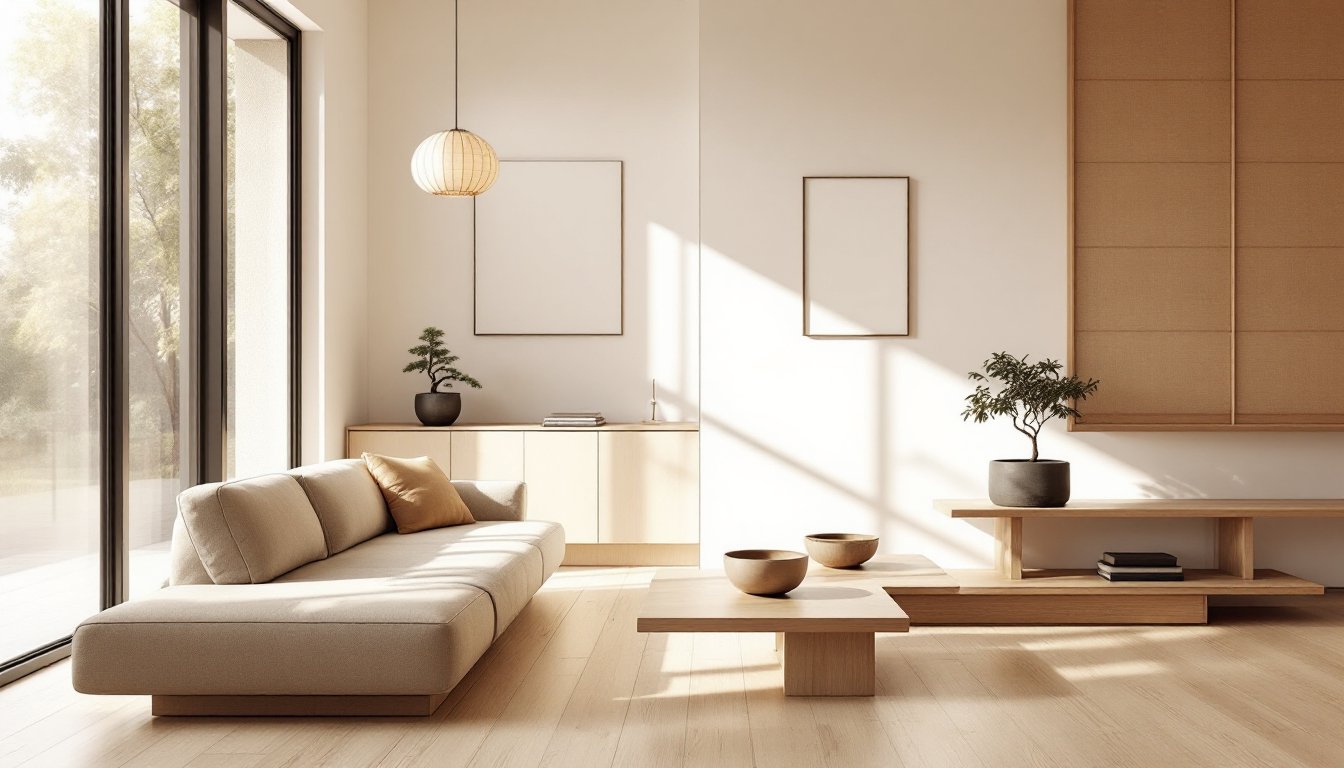
Japanese modern interior design isn’t about filling rooms, it’s about emptying them to what matters. It’s the intersection of centuries-old Japanese philosophy and contemporary functionality, where every object earns its place and every surface breathes. Unlike the stark minimalism that can feel cold, this approach wraps restraint in warmth: natural wood, soft light, and a calm that’s deliberate, not accidental. Homeowners and DIYers drawn to this aesthetic aren’t just chasing a trend. They’re building spaces that demand less and deliver more, cleaner sight lines, quieter minds, and rooms that actually work.
Key Takeaways
- Japanese modern interior design merges minimalist philosophy with functional beauty by removing visual clutter and celebrating natural materials, making spaces feel larger and calmer.
- Core principles like wabi-sabi (embracing imperfection), ma (negative space), and harmony with nature prioritize restraint, craftsmanship, and intentionality over decoration.
- Incorporate low-profile furniture, muted color palettes (off-whites, warm grays, soft earth tones), natural wood with visible joinery, and concealed storage to achieve this aesthetic.
- Maximize natural light with sheer bamboo blinds and supplement with warm white LEDs (2700–3000K) paired with matte black accents for crisp, clean lines.
- DIY projects like floating shelves, shoji-inspired sliding doors, and refinishing existing furniture let homeowners adopt Japanese modern design affordably without replacing everything.
- Start with decluttering by removing 30–50% of visible items before purchasing new pieces, as editing and intentionality matter more than decoration in this approach.
What Is Japanese Modern Interior Design?
Japanese modern interior design merges traditional Japanese principles, wabi-sabi, ma (negative space), and respect for natural materials, with contemporary minimalism and Western functionality. It’s not a replica of a Tokyo apartment or a Kyoto tea house: it’s an interpretation that honors restraint, craftsmanship, and intentionality.
The style prioritizes open, uncluttered spaces with clean lines and a muted palette. Furniture sits low to the ground. Walls often remain unadorned or feature a single piece of art. Storage is concealed, not showcased. Natural light takes center stage, supplemented by warm, diffused fixtures that mimic daylight.
This isn’t decorating, it’s editing. Every lamp, chair, and shelf must justify its existence. The result is a room that feels larger than its square footage and calmer than its function might demand. It’s a practical choice for anyone tired of visual noise or drowning in stuff.
Core Principles of Japanese Modern Aesthetics
Simplicity and restraint anchor the entire philosophy. Japanese design doesn’t add: it subtracts until only the essential remains. This means fewer furnishings, fewer decorative objects, and fewer distractions. If a room has ten items, aim for six. Then reassess.
Harmony with nature shapes material choices and spatial flow. Windows frame outdoor views like living paintings. Indoor plants, bonsai, bamboo, or a single branch in a ceramic vase, blur the boundary between inside and out. Seasonal shifts are acknowledged, not resisted.
Functional beauty rejects the division between utility and aesthetics. A handcrafted wooden stool serves as seating, side table, and sculptural object. Cabinet joinery is exposed because it’s beautiful and structural. This principle saves money and space, two wins for DIYers.
Ma, or negative space, is treated as an active design element, not empty leftover area. Walls, floors, and surfaces are given room to breathe. This makes small rooms feel expansive and large rooms feel intentional. It also simplifies cleaning and maintenance, a practical bonus often overlooked in design discussions.
Wabi-sabi embraces imperfection and impermanence. A wood table with visible grain, knots, or minor irregularities isn’t a flaw, it’s character. Patina on metal, natural wear on stone, and the subtle aging of materials are celebrated, not hidden. This makes the style forgiving for real-life homes with kids, pets, and wear.
Essential Elements to Incorporate in Your Space
Natural Materials and Textures
Wood is the backbone. Use light-toned species like white oak, ash, or maple for flooring, furniture, and trim. Avoid high-gloss finishes, opt for matte or hand-rubbed oil that highlights grain. Actual dimensions matter: use 3/4-inch solid hardwood or engineered planks at least 5/16 inch thick for flooring to ensure longevity.
For furniture, look for pieces with visible joinery, mortise-and-tenon, dovetails, or finger joints, that showcase craftsmanship. If you’re building, skip pocket screws in favor of traditional methods when possible. It’s more work, but the visual payoff is worth it.
Bamboo works well for window treatments, room dividers, or accent pieces. It’s sustainable, durable, and distinctly Japanese without feeling thematic. Use natural, untreated bamboo rather than stained or painted versions.
Stone and clay add weight and texture. A single stone vessel, ceramic bowl, or unglazed pottery piece provides contrast against wood. For countertops or backsplashes, consider honed (not polished) granite or soapstone. These materials age gracefully and require minimal upkeep, just periodic oiling for soapstone.
Natural textiles, linen, cotton, wool, jute, soften hard surfaces. Use them for window panels (sheer linen filters light beautifully), cushions, or area rugs. Avoid synthetic fibers and busy patterns. Solid colors or subtle textures work best. Modern interior design today emphasizes sustainable material choices that reduce environmental impact while maintaining aesthetic quality.
Minimalist Furniture and Functional Design
Low-profile furniture is non-negotiable. Platform beds, floor cushions (zabuton), and low dining tables shift the eye line downward, making ceilings feel higher and rooms more expansive. Standard Western bed frames often measure 24–30 inches high: Japanese-inspired platforms sit 8–12 inches off the floor.
If you’re DIYing a platform bed, use 2×6 or 2×8 framing lumber (actual dimensions: 1.5×5.5 or 1.5×7.25 inches) for the base, topped with 3/4-inch plywood. Finish with a simple stain or clear polyurethane. No box spring needed, use a futon or thin mattress designed for platform support.
Multi-functional pieces align with the principle of functional beauty. A low credenza serves as TV stand, storage, and display surface. A wooden bench doubles as seating and coffee table. Look for furniture with concealed storage, drawers, lift-tops, or sliding panels, to maintain clean lines. Many contemporary homes use multifunctional furniture solutions to maximize spatial efficiency.
Shoji screens or sliding panels (fusuma) divide spaces without permanent walls. You can build simple shoji-inspired frames using 1×2 pine or poplar (actual: 3/4×1.5 inches) and translucent rice paper or frosted acrylic panels. Use a table saw or miter saw for clean mitered corners. These screens work especially well in studio apartments or open-plan homes where flexible zoning is valuable.
Open shelving in kitchs and living areas forces intentionality, only items you use and enjoy stay visible. Install floating shelves using heavy-duty brackets rated for at least 50 pounds if displaying ceramics or books. Studs should be located with a stud finder: toggle bolts work for drywall-only mounting but have lower weight limits.
Creating a Japanese Modern Color Palette
Start with neutral base tones: off-whites, warm grays, soft beiges, and taupes. These aren’t builder-grade flat whites, they’re nuanced shades with subtle undertones. Benjamin Moore’s “Swiss Coffee” or Sherwin-Williams’ “Accessible Beige” are solid starting points. Sample at least three shades on your walls and observe them in morning, afternoon, and evening light before committing.
Paint coverage averages 350–400 square feet per gallon for quality interior latex. For a 12×14-foot room with 8-foot ceilings, plan on 1.5–2 gallons for two coats (always apply two coats for even color and durability).
Accent colors come from nature: muted greens (sage, moss), soft browns (umber, clay), charcoal, and black. Use these sparingly, a single accent wall, throw pillows, or a ceramic vase. Avoid bright, saturated hues. If you want color, lean toward earth tones found in rustic interior design but dialed back in intensity.
Wood tones add warmth without paint. Light-toned woods (ash, maple, birch) pair with cool grays: medium woods (oak, walnut) work with warm beiges. Consistency matters, mixing too many wood species in one room creates visual chaos. Stick to two, maybe three, wood tones max.
Black accents, window frames, door hardware, light fixtures, provide crisp contrast. Matte black finishes are preferred over shiny or oil-rubbed bronze. When choosing hardware, match finishes across all visible elements (hinges, knobs, pulls, switch plates). Mixing metals disrupts the clean aesthetic.
Natural light plays a bigger role than paint. Maximize it by removing heavy drapes, trimming exterior shrubs that block windows, and using sheer or bamboo blinds. For artificial lighting, choose warm white LEDs (2700–3000K color temperature) over cool whites, which feel clinical. Dimmer switches (around $15–25 per switch) offer control over mood and energy use.
DIY Tips for Achieving the Japanese Modern Look
Start with decluttering, not decorating. Remove 30–50% of visible items before buying anything new. Store seasonal or rarely used objects in labeled bins in closets, attics, or off-site storage. This costs nothing and delivers immediate impact.
Build simple floating shelves using 3/4-inch hardwood plywood or solid wood boards. Cut to length with a circular saw (a miter saw gives cleaner cuts but isn’t required). Finish with 120-grit then 220-grit sandpaper, apply stain or natural oil, and mount with heavy-duty floating shelf brackets screwed into studs. Wear safety glasses and a dust mask when cutting and sanding.
Install shoji-inspired sliding closet doors to replace standard bifolds. Use 1×2 lumber to frame panels, insert frosted acrylic sheets (available at home centers, cut to size), and mount on barn door hardware or bypass sliding tracks. This is an intermediate-level project requiring a miter saw, drill, and level. Budget a weekend and around $150–300 in materials depending on door size.
Refinish existing furniture rather than replacing it. Strip glossy finishes with a chemical stripper (work outdoors or in a well-ventilated garage: wear chemical-resistant gloves and respirator), sand smooth, and apply a matte polyurethane or natural oil finish. This transforms dated pieces into Japanese modern staples for the cost of sandpaper and finish.
Create a tokonoma-inspired niche (a traditional Japanese alcove) by framing out a shallow recessed shelf in a wall. This requires locating studs, cutting drywall (use a utility knife and drywall saw), framing with 2×4 lumber (actual: 1.5×3.5 inches), installing a 3/4-inch wood shelf, and patching/painting. This is a moderate DIY project. If the wall is load-bearing, consult a structural engineer or contractor, never cut load-bearing studs without proper headers and support. Permits may be required depending on jurisdiction. Thoughtful home decor ideas can inform how you style these custom niches.
Swap out light fixtures for paper lanterns, wood-and-metal pendants, or minimalist flush mounts. Ensure new fixtures are compatible with existing junction boxes and wiring. Shut off power at the breaker before starting. If you’re uncomfortable with electrical work, hire a licensed electrician, improper wiring is a fire hazard and violates NEC (National Electrical Code) standards.
Apply a wabi-sabi mindset to imperfections. That scratch on your wood table? Leave it. The uneven texture on a plaster wall? Embrace it. This saves time, money, and the frustration of chasing perfection. It’s also more authentic to the philosophy.