
Marbella’s sun-drenched villas and beachfront estates have long defined coastal luxury. But you don’t need a Mediterranean zip code to borrow the aesthetic, its signature blend of natural textures, clean lines, and indoor-outdoor flow translates surprisingly well to landlocked homes. Whether you’re refreshing a living room or tackling a full renovation, understanding the bones of this style, materials, proportions, and strategic restraint, makes the difference between authentic and kitschy. This guide breaks down the core elements, gives you actionable room-by-room approaches, and offers DIY-friendly projects that deliver the look without hiring a designer.
Key Takeaways
- Interior design Marbella style blends Spanish colonial roots, North African influence, and modern minimalism to create airy, tactile spaces with emphasis on natural light and whitewashed walls.
- Authentic Marbella interiors depend on materiality: limit your palette to warm whites, terracotta, and strategic accent colors like deep blue or olive green, using natural textures like linen, stone, and wrought iron.
- Open-plan layouts with intentional zoning using rugs, floating furniture, and layered pendant or wall lighting—rather than recessed cans—capture the signature indoor-outdoor flow of Marbella design.
- High ceilings (10–12 feet) define the Marbella aesthetic, but you can adapt 8-foot spaces by painting trim the same color as walls and using vertical design elements to draw the eye upward.
- Achieve the look affordably with DIY projects like limewashed accent walls ($40–$80), hardware swaps, terracotta tile backsplashes, and linen slipcovers, reserving professional help for structural changes and window installations.
What Defines Marbella Interior Design Style?
Marbella design isn’t one-note. It pulls from Spanish colonial roots, North African influence via Andalusia, and modern European minimalism. The result: airy spaces that feel curated but livable, with an emphasis on natural light and tactile materials.
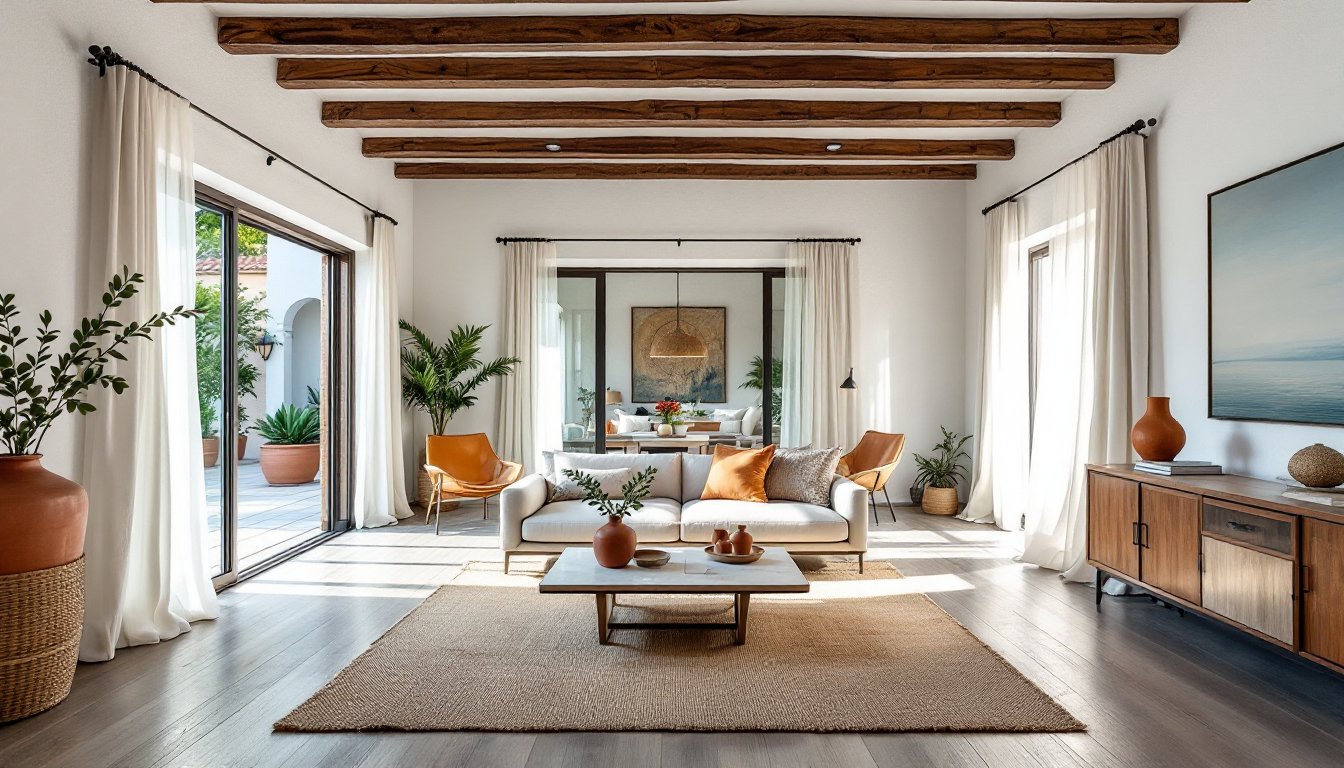
Think whitewashed walls (true lime wash or high-quality flat latex, not builder-grade eggshell), exposed beams in reclaimed or stained wood, and terracotta or wide-plank flooring. Furniture sits low and uncluttered, overstuffed sectionals are out: linen-covered sofas with visible wood frames are in. Metalwork shows up in wrought iron railings, light fixtures, and hardware, often with a matte black or aged bronze finish.
The style leans heavily on indoor-outdoor continuity. Large sliding glass doors, French doors, or folding patio systems blur boundaries. If you’re working with standard double-hungs or sliders, consider swapping them during a remodel (check local IRC codes for egress requirements in bedrooms). Short of that, frame views intentionally with sheer linen curtains and place furniture to face windows rather than walls.
Proportions matter. Marbella interiors favor high ceilings (10–12 feet where possible), which create volume without square footage. If you’re stuck with 8-foot ceilings, paint them and trim the same color to reduce visual breaks, and use vertical elements, tall plants, floor-to-ceiling drapes, to draw the eye up.
Key Color Palettes Inspired by Marbella’s Coastal Elegance
Marbella’s palette is deceptively simple: whites, warm neutrals, terracotta, and strategic pops of deep blue or olive green. The trick is layering tones, not slapping one shade everywhere.
Start with walls in warm white or off-white, think Benjamin Moore Swiss Coffee or Sherwin-Williams Alabaster. Skip stark white unless you have abundant natural light: otherwise it reads cold. Pair walls with natural linen (flax-colored, not gray-beige) for upholstery and window treatments.
Terracotta anchors the palette. Use it in tile (Saltillo or matte-glazed ceramic for floors, smaller format for backsplashes), clay pots, or accent walls. A single terracotta feature wall in a dining area or bedroom can ground the room without overwhelming it. If painting, choose a muted, earthy red-orange, not bright Home Depot orange.
Accent with Mediterranean blue, cobalt or deep turquoise, in throw pillows, ceramics, or a single painted interior door. Use sparingly: one or two pieces per room max. Olive green works similarly, especially in velvet upholstery or large potted plants (fiddle leaf figs, olive trees in planters).
Wood tones should be medium to dark with visible grain, walnut, teak, or stained oak. Avoid honey oak or pickled finishes, which skew dated. If you’re refinishing hardwood, a medium brown stain (Minwax Dark Walnut or Jacobean) with a matte poly topcoat hits the mark.
Essential Materials and Textures for the Marbella Look
Marbella interiors are tactile. You should be able to feel the difference between surfaces, rough plaster next to smooth linen, cool stone against warm wood.
Lime wash or Venetian plaster on walls delivers the slightly imperfect, hand-applied look you see in Spanish homes. True lime wash requires skill (and ongoing maintenance), but products like Portola Paints’ Roman Clay or Bauwerk Lime Paint offer similar texture in a more DIY-friendly format. Apply with a trowel or large brush in irregular strokes: perfection isn’t the goal. Coverage runs about 200 sq ft per gallon, less than standard paint.
For flooring, terracotta tile or wide-plank wood (6-inch or wider) works best. If you’re installing tile yourself, rent a wet saw and budget extra for cuts, handmade terracotta isn’t uniform, and you’ll need to dry-lay first. Underlayment should be cement board over plywood subfloor for tile: follow TCNA (Tile Council of North America) guidelines for deflection limits if installing over a joist span longer than 16 inches on center.
Natural stone, travertine, limestone, or honed marble, shows up in countertops, bathroom vanities, and fireplace surrounds. Honed finishes (matte, not polished) hide wear better and feel less formal. Seal stone annually with a penetrating sealer: topical sealers yellow and peel.
Textiles lean natural: linen, cotton, jute, and sisal. Synthetic blends look flat under natural light. For area rugs, jute or seagrass options add texture without pattern overload. Expect shedding for the first few weeks with natural fiber rugs, it’s normal.
Wrought iron and aged metals provide contrast. Swap builder-grade satin nickel hardware for oil-rubbed bronze or matte black. If you’re fabricating custom elements (pot racks, curtain rods), mild steel with a clear coat or beeswax finish develops a natural patina over time.
How to Incorporate Marbella Design Into Different Rooms
Living Spaces and Open-Plan Areas
Open layouts are central to the Marbella aesthetic, but they require intentional zoning. Define areas with rugs, not walls. A large jute rug under the seating area, a runner in the dining zone, and terracotta tile in the kitchen create visual boundaries without breaking sightlines.
Furniture should float, not hug walls. Pull the sofa 12–18 inches off the wall, place a console table behind it, and anchor with a low coffee table (16–18 inches high) in wood or stone. Avoid matchy-matchy sets: mix a linen sofa with leather accent chairs or a wood bench.
Lighting deserves its own paragraph. Skip recessed cans if possible, they’re generic and create harsh shadows. Instead, use a combination of pendant lights (woven rattan or wrought iron with Edison bulbs), table lamps with linen shades, and wall sconces flanking a fireplace or media console. Dimmer switches are non-negotiable: install them on all overhead fixtures (Lutron Diva or Caseta models work with most existing wiring, but check NEC load ratings if you’re controlling multiple fixtures on one switch).
If you have a fireplace, expose or add a stone surround. Drywall surrounds with builder-grade mantels kill the vibe. Limestone or stacked natural stone (not cultured stone veneer, it looks fake) makes a statement. DIY installation is possible with construction adhesive and metal lath, but hire out if the firebox needs structural modification.
Bedrooms and Private Retreats
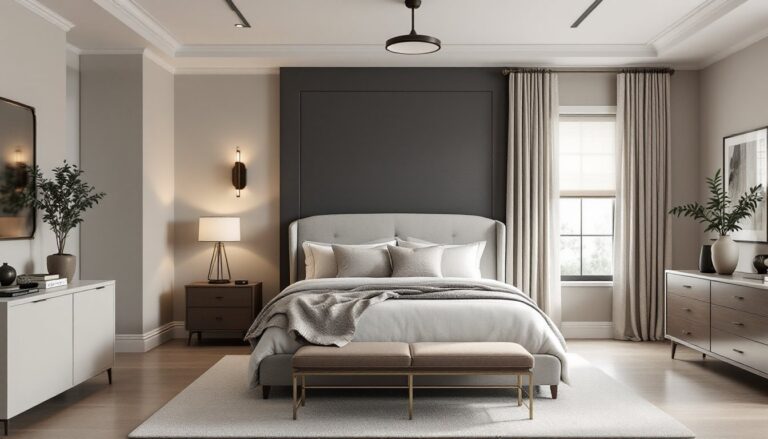
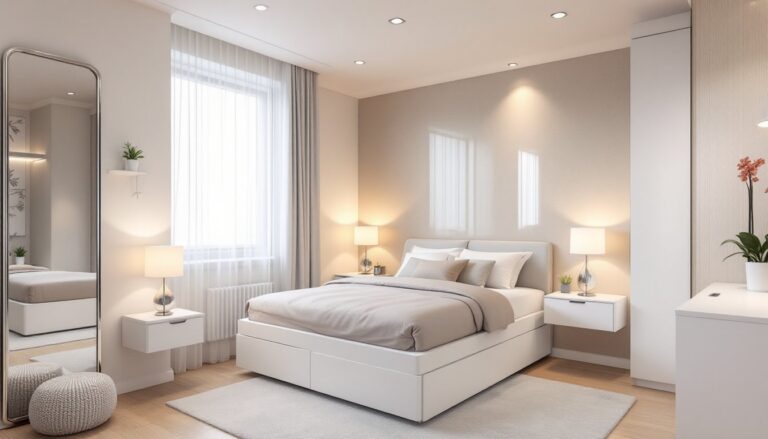
Bedrooms should feel like boutique hotel rooms, simple, serene, and free of clutter. Start with the bed. A low-profile platform bed in solid wood (or a wood-and-upholstered hybrid) works better than ornate headboards. Dress it with white or natural linen bedding, layered with a lightweight cotton or linen quilt. Skip the decorative pillows: two sleeping pillows and one lumbar is enough.
Walls can handle texture here. A limewash or clay plaster accent wall behind the bed adds depth without pattern. If you’re painting, use a matte or flat finish, it diffuses light better than eggshell. Touch-ups are easier than you think if you save extra paint and use a small roller.
Window treatments should be sheer linen or cotton, floor-to-ceiling even if the window is shorter. Mount rods just below the ceiling line (or use recessed tracks) and let panels puddle slightly on the floor. This elongates the wall and softens hard edges. Blackout liners can attach with drapery rings if light control is an issue.
Flooring follows the same rules as living areas, terracotta, wood, or natural stone. If the subfloor can’t support tile, engineered hardwood in a wire-brushed finish (which mimics hand-scraped texture) runs about $4–$8 per square foot installed, less if you’re doing it yourself. Acclimate planks in the room for 48 hours before install to avoid gapping.
Built-ins or open shelving in reclaimed wood replace bulky dressers. If you’re building shelves, use nominal 2×10 or 2×12 boards (actual dimensions 1.5 x 9.25 or 1.5 x 11.25 inches) and support them with metal brackets or concealed floating shelf hardware rated for at least 50 pounds per foot. Sand to 220-grit and finish with tung oil or matte poly.
DIY Projects to Achieve Marbella-Inspired Interiors on a Budget
You don’t need a gut renovation to shift the aesthetic. A few targeted projects deliver outsized impact.
Limewash or textured paint treatment: Pick one accent wall, fireplace, behind the bed, or a dining area, and apply a clay-based paint or limewash. Start with a base coat of flat white latex, then apply the textured product with a 6-inch taping knife or plastering trowel in irregular, overlapping strokes. Let it dry (usually 24 hours), then lightly sand high spots with 220-grit paper. Total cost for a 100-square-foot wall: $40–$80 in materials. Wear a dust mask when sanding: clay and lime particles are fine and irritating.
Swap out hardware and fixtures: Replace cabinet pulls, door handles, and light switch plates with matte black or aged bronze. This takes an afternoon and costs $50–$150 depending on the room. Use a template or painter’s tape to mark new hole positions if switching from single-hole to bar pulls. For lighting, many designers showcased in luxury interior design publications emphasize the impact of Mediterranean-inspired fixtures, hunt for wrought iron chandeliers or woven pendants at estate sales or online marketplaces.
DIY terracotta tile backsplash: A small backsplash (say, 15 square feet behind a stove) is a manageable tile project. Use 4×4-inch or 6×6-inch terracotta tile, thinset mortar, and unsanded grout (for joints under 1/8 inch). Rent a wet saw ($40/day) or buy a manual tile cutter ($30) for straight cuts. Apply thinset with a 1/4-inch notched trowel, back-butter each tile, and use 1/8-inch spacers. Grout after 24 hours, then seal with a penetrating sealer once cured. Total cost: $150–$250. Always wear safety goggles when cutting tile, chips fly.
Build floating shelves with reclaimed wood: Buy or source reclaimed 2×10 or 2×12 boards (often available from salvage yards or Craigslist for $2–$5 per linear foot). Cut to length with a circular saw or miter saw, sand smooth, and finish with Danish oil or a single coat of matte poly. Install with heavy-duty floating shelf brackets (rated 75+ pounds each) screwed into wall studs. Locate studs with a stud finder: if studs don’t align, use toggle bolts rated for your wall type (drywall, plaster, etc.). Two 48-inch shelves run about $60–$100.
Refresh furniture with linen slipcovers: If you have a dated sofa or armchair, a custom or semi-custom linen slipcover (available from online retailers like Bemz or local upholsterers) transforms it for $200–$500. Choose natural linen in flax or white, and go for a relaxed fit, the slight wrinkles are part of the aesthetic. Wash in cold water and line dry to avoid shrinkage.
Paint interior doors: Builder-grade six-panel doors don’t fit the style. Sand them lightly (120-grit), prime with a stain-blocking primer (if going from stain to paint), and apply two coats of matte or satin paint in white, terracotta, or deep blue. Use a mini roller for flat panels and a 2-inch angled brush for edges. Remove doors and paint flat on sawhorses for the cleanest finish. Budget half a day per door, $20–$30 in materials per door.
For higher-impact work, removing walls to create open plans, relocating plumbing, or installing new windows, check with your local building department. Load-bearing walls require engineered headers and permits, and window replacements must meet egress codes in bedrooms. Projects featured in architecture and design showcases often involve structural changes handled by licensed professionals, so know when to call in help.