
Sarasota’s interior design scene reflects everything the Gulf Coast is known for, natural light, airy spaces, and a palette pulled straight from the water and sand. Whether you’re renovating a mid-century ranch in Southside Village or refreshing a condo on Longboat Key, understanding what works in this climate and culture makes the difference between a space that feels authentic and one that looks like a catalog drop. This guide breaks down the design characteristics that define Sarasota interiors, the styles that thrive here, and practical tips for tackling projects yourself.
Key Takeaways
- Sarasota interior design must account for high humidity, salt air, and UV exposure by selecting moisture-resistant materials like engineered hardwood, performance fabrics, and mold-resistant drywall.
- The indoor-outdoor connection is essential to Sarasota’s design aesthetic—use sliding glass doors, large windows, and seamless flooring transitions to blur boundaries between interior and exterior living spaces.
- Coastal and Mediterranean styles thrive in Sarasota interiors when paired with light color palettes, natural materials like rattan and teak, and large-format tiles that minimize grout lines and enhance functionality.
- Paint, window treatments, and hardware upgrades deliver the highest design impact for DIY projects—use mildew-inhibiting paints, faux wood blinds for humidity resistance, and standard 3- or 4-inch spacing for cabinet hardware.
- Respect the existing architectural heritage—whether mid-century modern, Spanish Colonial, or Old Florida style—to create authentic interiors that enhance rather than fight your home’s foundational design.
What Makes Sarasota Interior Design Unique?
Sarasota’s geography and architectural heritage shape its interiors in specific ways. The city sits on the Gulf of Mexico, which means high humidity, salt air, and intense UV exposure. Materials that work beautifully in dry climates, unsealed wood, certain fabrics, some wall finishes, don’t hold up here without careful selection and treatment.
Natural light is abundant year-round, which influences color choices. Rooms with southern exposures can handle deeper, cooler tones without feeling cave-like. North-facing spaces benefit from warmer hues to balance the softer light. Window treatments need to do double duty: block UV damage to floors and furniture while still taking advantage of views and breezes.
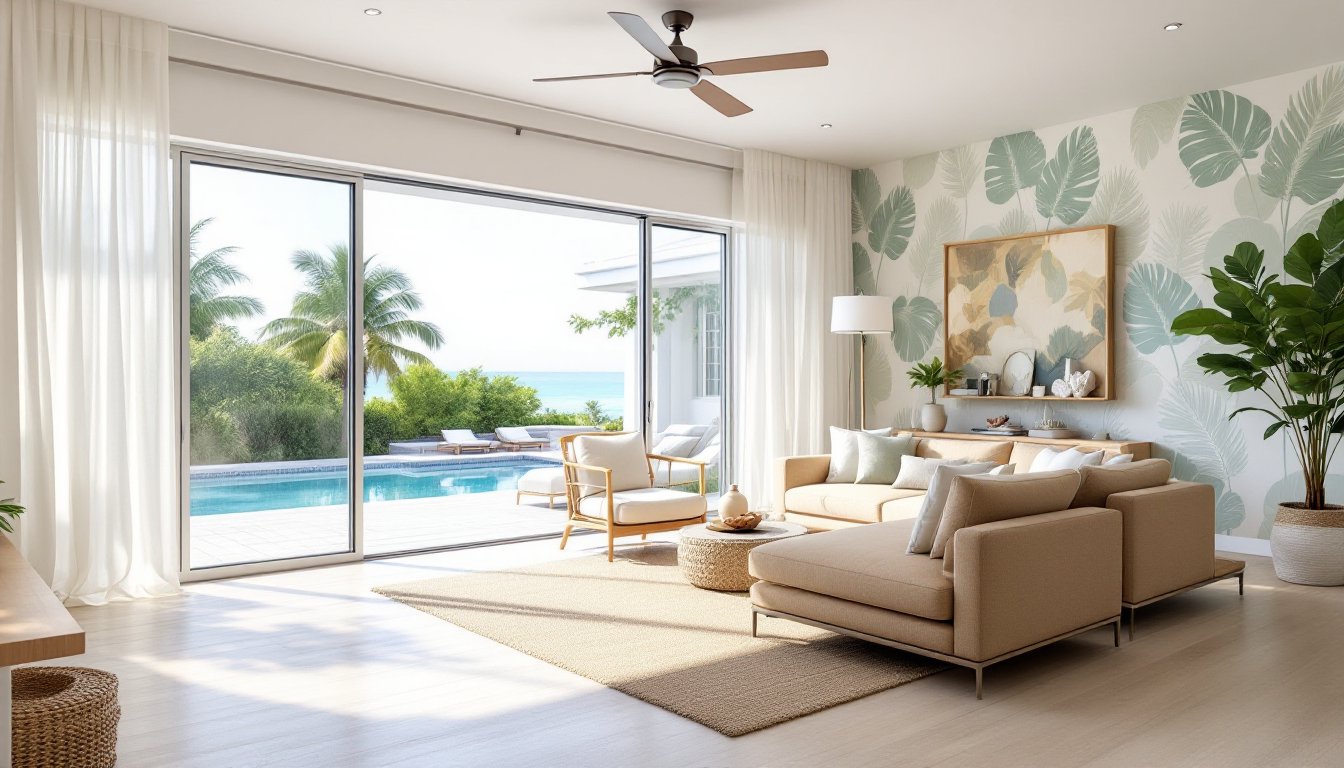
The indoor-outdoor connection is non-negotiable. Sliding glass doors, French doors, and large windows blur the line between living spaces and lanais, patios, or pool decks. Flooring often transitions seamlessly from interior tile to exterior pavers. Furniture layouts orient toward outdoor views rather than traditional focal points like fireplaces (which many Sarasota homes lack).
Architectural context varies widely. The Sarasota School of Architecture left a legacy of mid-century modern homes with flat roofs, clerestory windows, and open floor plans. Older neighborhoods feature Mediterranean Revival and Spanish Colonial styles with stucco, terra cotta tile roofs, and arched doorways. Newer construction leans toward contemporary coastal with clean lines and hurricane-rated glass. Interior design works best when it respects the bones of the building rather than fighting them.
Humidity control matters for finishes and furnishings. HVAC systems need to manage moisture as much as temperature. Unsealed drywall can wick moisture in bathrooms and kitchens: use mold-resistant drywall (purple board or green board) in wet areas. Fabrics should be synthetic blends or treated for mildew resistance. Solid wood furniture needs proper acclimation and finishing to prevent warping.
Popular Interior Design Styles in Sarasota Homes
Coastal and Tropical-Inspired Aesthetics
Coastal design in Sarasota isn’t about anchors and rope accents. It’s about working with the environment rather than theming around it. Think light, breathable spaces with a palette pulled from the shoreline: whites, soft blues, sandy neutrals, and weathered wood tones.
Flooring choices lean toward porcelain tile that mimics wood or natural stone. Real hardwood can work if it’s engineered (more stable in humidity than solid planks) and properly sealed, but tile offers better moisture resistance and stays cooler underfoot. Large-format tiles (12×24 inches or larger) minimize grout lines and make spaces feel bigger.
Furniture keeps a low profile, literally. Pieces with legs rather than heavy skirts allow air circulation and make rooms feel less cluttered. Rattan, wicker, and teak hold up well and fit the aesthetic. Upholstery in performance fabrics (Sunbrella, Crypton) resists fading and moisture.
Color saturation stays moderate. Bright whites can wash out in intense sunlight: opt for warm whites (with yellow or beige undertones) or soft off-whites. Blues work best in grayed or muted tones rather than primary shades. Pops of coral, seafoam, or citrus add energy without overwhelming.
Tropical-inspired design pushes further into bold botanicals and organic textures. Large-leaf prints (monstera, banana leaf, palm fronds) appear in wallpaper, textiles, or artwork. Natural materials like jute rugs, bamboo shades, and stone accents reinforce the connection to the landscape. Ceiling fans aren’t just functional, they’re a design element. Look for models with DC motors (quieter, more efficient) and blade spans sized to room dimensions (52 inches for rooms up to 225 square feet, 60+ inches for larger spaces).
Modern Mediterranean and Old Florida Charm
Modern Mediterranean design updates traditional Spanish and Italian influences with cleaner lines and lighter palettes. Stucco walls, arched doorways, and wrought iron details remain, but the heavy dark woods and ornate tile give way to white oak, simplified patterns, and matte finishes.
Flooring might be terracotta tile or porcelain that mimics it, often in large formats or plank shapes. Exposed beams (real or decorative) add warmth without cluttering sightlines. Color palettes pull from sun-baked earth tones, terracotta, ochre, olive, balanced with crisp whites and sky blues.
Kitchens feature plaster-look hoods, open shelving, and natural stone counters like limestone or honed marble. Backsplashes might use zellige tile (handmade Moroccan clay tile with irregular glazing) or simple subway tile in warm whites. Hardware in aged brass or matte black adds contrast without competing with architectural details.
Old Florida style references the state’s pre-air-conditioning era: high ceilings, transom windows, and wraparound porches. Interiors kept things simple out of necessity, beadboard walls, painted wood floors, shutters instead of heavy drapes. This aesthetic is experiencing a revival among buyers who want Southern home design traditions that suit the climate. Colors stay light and breezy. Furniture mixes vintage finds with reproduction pieces, wicker chairs, slatted benches, painted cottage-style cabinets. Shiplap (real or plywood planks with routed edges) works on accent walls or ceilings, installed horizontally with a nickel-gap (⅛-inch reveal between boards) for texture without visual weight.
DIY Interior Design Tips for Your Sarasota Home
Start with paint and window treatments, the highest impact for the lowest skill barrier. Paint coverage averages 350-400 square feet per gallon for primer and finish coats. In humid climates, use interior paints with mildew inhibitors (most major brands include this in bathroom and kitchen formulas). Allow paint to cure fully (7-14 days) before hanging anything heavy or washing walls.
For window treatments, measure carefully. Inside mount blinds sit within the window frame: you’ll need at least 2 inches of flat mounting surface depth. Outside mount blinds cover the entire window casing and should extend 2-3 inches beyond the frame on each side for light control. Faux wood blinds resist warping better than real wood in humidity. If you prefer the look of wood, seal all edges and surfaces before installing.
Accent walls add depth without a full repaint. Consider removable wallpaper for renters or commitment-phobes, it installs with a peel-and-stick backing and removes cleanly. When choosing patterns, scale matters: small, busy prints work in powder rooms or small nooks: large-scale prints need at least 10 feet of uninterrupted wall to read properly.
Refreshing hardware and lighting transforms spaces fast. Swapping cabinet pulls, drawer handles, and door knobs takes a screwdriver and maybe a drill if new hardware doesn’t align with existing holes (wood filler and touch-up paint fix old holes). Standard center-to-center spacing for cabinet pulls is 3 or 4 inches (measure between screw holes, not the pull ends).
Lighting layering, ambient, task, and accent, makes rooms functional and flexible. Ambient (overhead fixtures, recessed cans) provides general illumination. Task (under-cabinet strips, desk lamps, vanity sconces) focuses light where you work. Accent (picture lights, uplights, LED strips) highlights architecture or artwork. Dimmer switches add control: make sure your bulbs are dimmable (not all LEDs are). Standard wall switches work on 15-amp circuits: if you’re adding multiple high-wattage fixtures, verify your circuit can handle the load.
Building floating shelves requires locating studs (use a stud finder, not the knuckle-knock method, it’s unreliable). Wall studs in most homes sit 16 inches on center. Brackets or hidden supports must anchor into studs for any shelf holding more than decorative weight. For drywall-only mounting, use toggle bolts or snap toggles rated for the load.
When shopping for design inspiration or working with professionals, platforms like homify show portfolio work from various designers, which helps clarify what styles resonate. If you decide to hire help, the interior design professionals in Sarasota range from full-service firms to hourly consultants who’ll review your plan and offer feedback.
Conclusion
Sarasota interiors succeed when they work with the climate, respect the architecture, and balance aesthetics with durability. Whether you’re drawn to airy coastal palettes or warm Mediterranean textures, the fundamentals stay the same: control humidity, choose materials that handle heat and moisture, and design for how you actually live. Start with one room, test finishes and colors on sample boards, and don’t skip the prep work.