
Cape Cod style emerged on the Massachusetts coastline in the 1600s, but its appeal hasn’t faded. Defined by clean lines, natural light, and an unpretentious connection to the sea, it offers a livable alternative to overly styled interiors. This isn’t about throwing starfish on everything or forcing nautical clichés into every corner. Instead, it’s a practical, durable design language built around comfort, functionality, and materials that weather well. Whether renovating a century-old cottage or updating a modern suburban home, Cape Cod design principles translate across architectural styles and climates.
Key Takeaways
- Cape Cod interior design prioritizes simplicity, durability, and natural light through a restrained color palette of whites, creams, and coastal accent colors like navy and seafoam green.
- Natural materials such as wide-plank hardwood flooring, beadboard, shiplap, and linen textiles create spaces that age gracefully and withstand daily wear, humidity, and traffic.
- Living rooms benefit from slipcovered furniture in neutral tones, layered area rugs, and minimal window treatments that maximize daylight while maintaining the uncluttered aesthetic.
- Cape Cod kitchens feature white shaker-style cabinets, practical countertops like butcher block or marble, and open shelving with uniform dishware to preserve visual simplicity.
- Bedrooms in Cape Cod style emphasize rest through soft wall colors, simple wood bed frames, built-in storage solutions, and plantation shutters or linen curtains that control light.
- This design approach rewards honest materials and thoughtful editing over expensive finishes, creating comfortable, livable homes designed to last for generations.
What Is Cape Cod Interior Design?
Cape Cod interiors prioritize simplicity, durability, and natural light. The style originated in Colonial-era New England, where harsh winters and salty air demanded practical materials and compact, efficient layouts. Homeowners needed spaces that stayed warm, resisted moisture, and accommodated extended families without excess.
Today, Cape Cod design retains that utilitarian backbone but adds flexibility. The aesthetic centers on white or neutral wall colors, wide-plank wood floors (often pine or oak), and minimal ornamentation. Rooms feel open and airy, with large windows, sometimes multi-pane casements or double-hungs, that maximize daylight and ventilation.
Unlike styles that chase trends, Cape Cod interiors lean on longevity. Materials like shiplap, beadboard, and natural fiber rugs don’t just look good, they hold up under foot traffic, humidity, and daily wear. The architectural roots of Cape Cod homes emphasize steep rooflines, central chimneys, and symmetrical layouts, all of which inform interior choices like focal fireplaces, built-in storage, and defined room functions.
Key Elements of Cape Cod Style
Color Palettes That Define the Cape Cod Aesthetic
Cape Cod interiors rely on a restrained color scheme. Start with a base of white, cream, or soft gray on walls and ceilings. These neutrals reflect light, making small rooms feel larger, a critical consideration in homes originally designed with modest square footage.
Accent colors draw from coastal surroundings: navy blue, seafoam green, weathered denim, and sandy beige. These shades appear in textiles, pottery, and painted furniture, but sparingly. Overly saturated or trendy colors clash with the style’s understated character.
Woodwork often stays natural or gets painted white. If using stain, opt for lighter tones like natural oak or whitewashed pine rather than dark espresso finishes. Trim, baseboards, and crown molding in semi-gloss white add crispness without overwhelming the space.
Natural Materials and Textures
Cape Cod design favors materials that age gracefully and connect to the landscape. Wide-plank hardwood flooring (actual dimensions around ¾” x 5″ or wider) in oak, pine, or reclaimed wood provides warmth underfoot. If installing new floors, consider a matte or satin finish, high-gloss polyurethane feels too formal.
For walls, tongue-and-groove beadboard or shiplap (typically ½” to ¾” thick) adds subtle texture without busy patterns. Install beadboard as wainscoting in kitchens, bathrooms, or mudrooms for moisture resistance and easy cleaning. Shiplap works well in living areas or bedrooms, either painted white or left in a natural finish.
Textiles should feel tactile and durable: linen, cotton canvas, jute, and sisal. Avoid synthetic fabrics that trap heat or look too polished. Area rugs in natural fiber, like a 5′ x 8′ braided jute rug or flat-weave cotton runner, ground seating areas and handle sand, pet traffic, and spills better than delicate wool.
Other material staples include wrought iron or brushed nickel hardware, ceramic or stone countertops (marble, soapstone, or butcher block in kitchens), and wicker or rattan accents in furniture and storage baskets. Metals should look understated, not ornate: think simple cabinet pulls, curtain rods, and light fixtures.
How to Create a Cape Cod Living Room
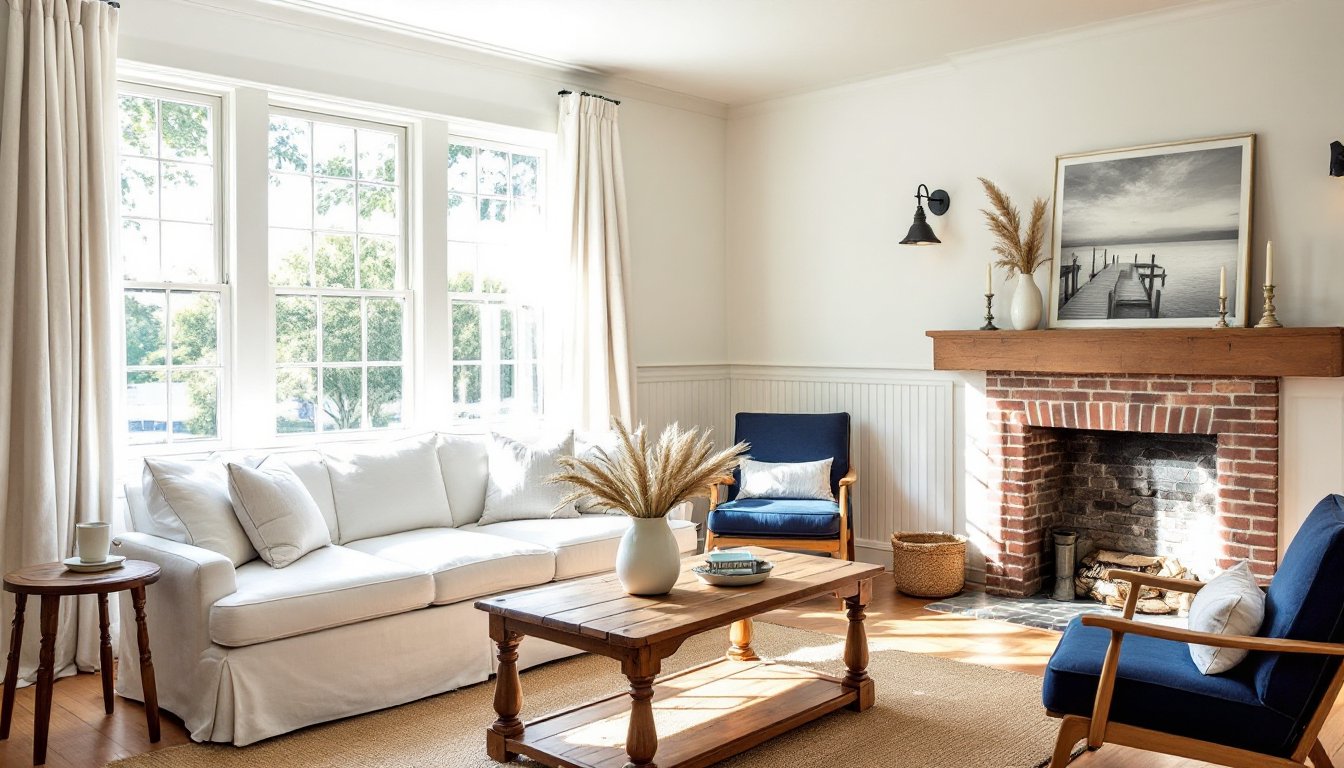
Start with white or off-white walls (Benjamin Moore’s “White Dove” or Sherwin-Williams’ “Alabaster” are common choices) and let natural light do the heavy lifting. If the room has a fireplace, make it the focal point. Paint brick surrounds white or install a simple wood mantel in natural or painted finish.
Furniture should be low-profile and comfortable. A slipcovered sofa in white or navy linen anchors the space. Slipcovers are practical, they’re machine-washable and can be replaced as they wear. Pair with a pair of upholstered armchairs or a wingback in a muted stripe or solid color.
Coffee tables work best in natural wood or painted finishes. A reclaimed pine coffee table (around 48″ x 28″) or a simple white-painted piece with turned legs fits the aesthetic. Avoid glass tops or metal bases, they feel too contemporary.
Layering is key for warmth. Add a jute or sisal area rug (8′ x 10′ for a standard living room), then layer a smaller cotton or wool throw rug on top if desired. Window treatments should be minimal: white or linen curtains on simple rods, or classic Roman shades in a neutral fabric. Skip heavy drapes or valances.
Lighting should feel unobtrusive. Opt for semi-flush ceiling fixtures in brushed nickel or white-painted metal, and add table lamps with ceramic or wooden bases and linen shades. Wall sconces flanking the fireplace or bookshelves add functional light without cluttering surfaces.
Accessories stay restrained: a few white ceramic vases, a bowl of shells or driftwood, and framed black-and-white coastal photography or nautical charts. Avoid tchotchkes and overtly themed decor. The room should feel collected, not decorated.
Designing a Cape Cod-Inspired Bedroom
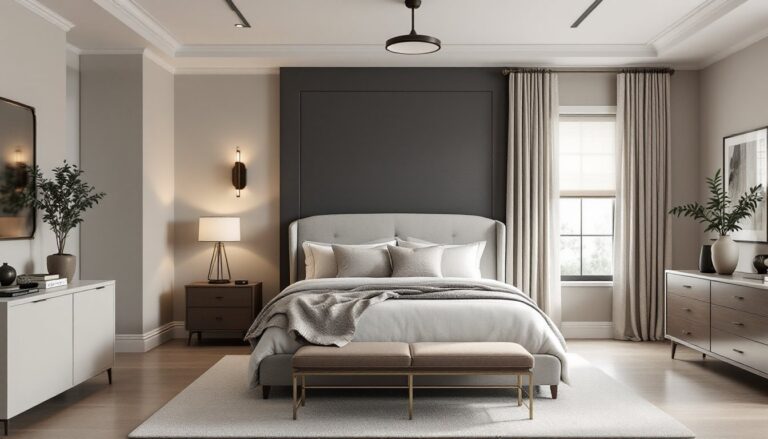
Bedrooms in Cape Cod homes prioritize rest and simplicity. Paint walls in soft white, pale blue, or warm gray. If the room has sloped ceilings (common in Cape-style second floors), paint them the same color as the walls to visually expand the space.
Bed frames should be wood or upholstered in neutral fabric. A simple platform bed or low-profile sleigh bed in natural oak or painted white works well. Skip ornate headboards or metal frames with scrollwork. Bedding follows the same restrained palette: white or cream duvet covers, linen or cotton sheets, and a lightweight quilt in navy, chambray, or ticking stripe.
Nightstands can be mismatched for a collected look, one painted, one natural wood, but keep them similar in scale. Two-drawer nightstands around 24″ high provide storage without bulk. Top with simple ceramic or glass table lamps and a small dish for jewelry or a book.
Flooring is typically hardwood with a cotton or jute area rug (5′ x 8′ or 6′ x 9′ depending on room size) placed under the bed’s lower third. If the floor is cold underfoot in winter, consider adding radiant floor heating during a renovation, it’s a common upgrade in coastal climates.
Window treatments should allow maximum light. White plantation shutters (2½” or 3½” louvers) offer privacy and ventilation, or hang simple linen curtains on tension rods. Blackout linings can be added if needed without changing the exterior aesthetic.
Storage is critical in compact bedrooms. Built-in closets with painted wood doors or curtained alcoves keep clutter hidden. If space allows, add a low dresser or blanket chest at the foot of the bed in natural or painted wood.
Cape Cod Kitchen and Dining Spaces
Cape Cod kitchens blend function with farmhouse simplicity. White shaker-style cabinets (inset or overlay, with ¾” face frames) are the standard. Pair them with brushed nickel or polished chrome knobs and pulls, simple, not ornate. If painting existing cabinets, use a high-quality semi-gloss or satin cabinet paint and apply a bonding primer first for durability.
Countertops should be practical and timeless. Butcher block (1½” to 2″ thick maple or oak) adds warmth and works well on islands or prep areas. For perimeter counters, marble, quartz, or soapstone in white or light gray tones resists stains and heat. Avoid busy granite patterns or dark colors that shrink visual space.
Backsplashes often feature white subway tile (3″ x 6″) in a brick or straight-lay pattern with light gray grout. For added texture, use beadboard or painted shiplap behind open shelving. If installing tile yourself, use a ¼” x ⅜” V-notch trowel for even adhesive coverage and allow 24 hours before grouting.
Open shelving (typically 10″ to 12″ deep, mounted on sturdy brackets) displays everyday dishes and glassware. Keep items uniform, white plates, clear glass, and ceramic pitchers, to avoid visual clutter. Lower cabinets handle heavier storage like pots, mixing bowls, and pantry staples.
Lighting matters. Install recessed LED downlights (4″ or 6″ housings) on a grid for general illumination, then add under-cabinet LED strips for task lighting. A pendant or semi-flush fixture over a kitchen table or island should be simple: glass globe, metal cage, or painted metal shade.
Dining spaces favor farmhouse tables in natural wood or painted finishes. A 72″ x 36″ table seats six comfortably. Pair with ladder-back or Windsor chairs in matching or mixed finishes. If space is tight, a built-in banquette with storage underneath maximizes seating and function. Design inspiration for rustic dining setups overlaps significantly with Cape Cod’s emphasis on sturdy, functional furniture.
Flooring in kitchens and dining areas should be durable. Wide-plank oak or pine holds up well if properly sealed. For higher moisture areas, consider porcelain tile that mimics wood (planks around 6″ x 36″) or classic 12″ x 12″ ceramic tile in white or cream. Grout lines should be narrow (⅛”) and sealed annually to resist staining.
Keep the color palette neutral. Walls stay white or soft gray, and accents come from textiles: striped linen dishtowels, cotton placemats, and a simple runner in navy or natural fiber. Additional design ideas for coastal homes emphasize clean lines and minimal ornamentation. Avoid open displays of small appliances or cookware, store them in cabinets or pantries to maintain the uncluttered aesthetic.
Cape Cod interiors don’t demand perfection or expensive finishes. They reward honest materials, thoughtful editing, and a respect for the original intent: homes built to last, designed for life, and comfortable enough to live in every day.