
Loft living offers something conventional floor plans can’t: raw, open volume that lets you shape a space on your own terms. Whether it’s a converted industrial building or a newer construction with exposed beams and high ceilings, lofts demand a design approach that balances openness with function. The challenge isn’t just decorating, it’s defining distinct areas without walls, managing acoustics in a cavernous shell, and highlighting architectural character without turning the space into a museum of ductwork. Done right, loft interior design creates a home that’s both dramatic and livable, where industrial bones meet personal style.
Key Takeaways
- Loft interior design balances raw architectural features like exposed brick, steel beams, and high ceilings with intentional zoning through furniture, lighting, and area rugs.
- Oversized furniture scaled for spacious lofts—96 to 108-inch sectionals and tall shelving units—prevents pieces from vanishing in cavernous open floor plans.
- Effective zoning without walls requires clear circulation paths at least 36 inches wide between functional areas, using pony walls, glass partitions, or barn doors to define sleeping and working zones.
- Layered lighting combining ambient, task, and accent sources is essential to combat the challenges of extreme ceiling heights and echo common in industrial loft spaces.
- Strategic use of textiles, area rugs, and acoustic panels softens sound reflection while wood tones and reclaimed materials warm cold industrial finishes.
- Motorized window treatments for oversized loft windows manage light, glare, and privacy while emphasizing vertical height when installed near the ceiling line.
What Makes Loft Interior Design Unique?
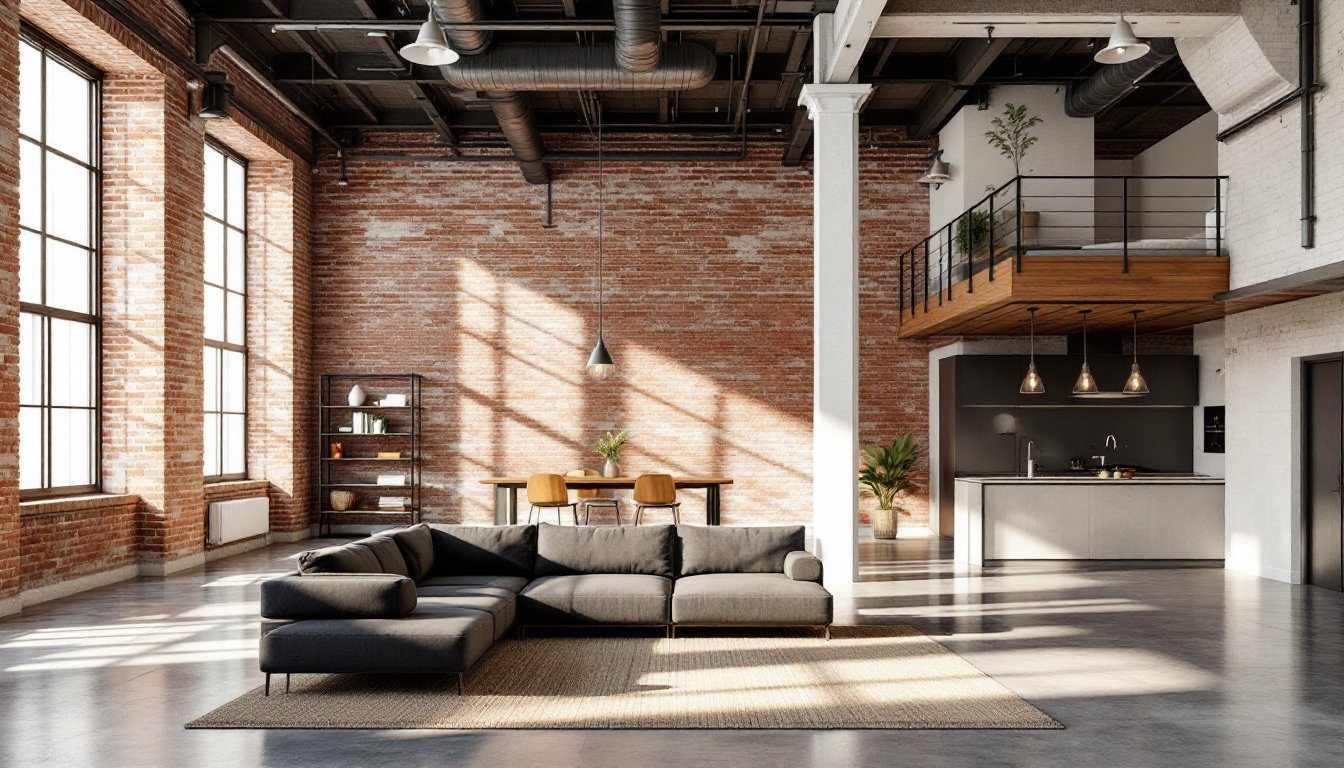
Loft spaces break nearly every rule of traditional residential design. Instead of compartmentalized rooms, you’re working with open floor plans that can stretch 1,000 to 3,000+ square feet without a single load-bearing wall. Ceiling heights often range from 10 to 20 feet, sometimes with mezzanine potential.
The bones are different, too. Exposed brick walls, steel beams, concrete floors, and visible HVAC ducts aren’t flaws to hide, they’re the architectural DNA. Many lofts occupy former factories, warehouses, or commercial buildings where function drove form. That industrial heritage shows in features like oversized windows (often 8 to 12 feet tall), cast-iron columns, and wood joist ceilings.
This openness creates freedom but also friction. Sound travels without barriers. A kitchen smells reach the bedroom. Heating and cooling costs spike when climate-controlling a volume that could swallow two conventional homes. HVAC zoning becomes essential, often requiring multiple mini-split systems or upgraded ductwork to manage temperature differentials between high and low zones.
Unlike traditional homes where walls define purpose, loft dwellers must intentionally create function through furniture arrangement, lighting zones, and strategic dividers. It’s spatial design from scratch, closer to commercial space planning than residential decorating.
Key Design Elements for Loft Spaces
Embracing Exposed Industrial Features
Authentic loft character lives in the raw materials. Exposed brick brings texture and warmth, but it’s not maintenance-free. Older masonry may need repointing (replacing deteriorated mortar joints) or sealing to control dust. Unsealed brick is porous, plan on a clear masonry sealer if the wall will be behind a bed or sofa.
Concrete floors are durable and low-maintenance but brutally hard underfoot and acoustically reflective. Many loft owners polish and seal existing slabs, then add area rugs in living zones. If the slab has significant cracking or you want warmth, consider engineered hardwood or luxury vinyl plank over a foam underlayment. Both handle the minimal subfloor prep concrete offers.
Exposed ductwork and conduit can stay visible or get painted. Industrial purists leave galvanized metal as-is: others spray ducts matte black or a color that recedes into the ceiling plane. If you’re adding new runs (common when rezoning HVAC), use rectangular duct where possible, it’s less visually intrusive than round spiral duct.
Steel beams and columns often carry structural loads. Never modify, drill, or weld these without an engineer’s approval. Painting is fine: use a rust-inhibiting metal primer if there’s any surface oxidation, then finish with latex or oil-based paint.
Zoning Your Open Floor Plan
Without walls, zoning relies on furniture, flooring transitions, and lighting. Start by mapping out functional areas: sleeping, cooking, dining, working, lounging. Aim for clear circulation paths at least 36 inches wide between zones.
Area rugs are the simplest zone markers. A 9×12-foot rug anchors a living area: a 5×7 or 6×9 defines a dining spot. Underlayment pads prevent slipping on hard floors and add a touch of sound absorption.
Furniture as architecture works when pieces have enough visual mass. A sofa or sectional placed perpendicular to a wall creates a boundary without blocking sightlines. Bookcases (at least 72 inches tall) double as room dividers, leave the back open or finish both sides. Modular shelving systems let you adjust over time.
Partial walls and glass partitions offer more separation. A pony wall (42 to 48 inches tall) can hide a bed from the entry while preserving openness. Steel-framed glass panels are loft-appropriate and keep light flowing: expect to budget $150–$300 per linear foot installed for quality framing and tempered glass. This is often a job for a professional unless you have metal fabrication and glazing experience.
Sliding barn doors or track-mounted panels close off bedrooms or bathrooms when needed. Hardware kits run $100–$400 depending on weight capacity. Installation requires solid blocking, if mounting to drywall, locate studs or install a 2×6 or 2×8 backer board between studs during framing. When working with elements that echo rustic interior design, reclaimed wood barn doors complement exposed brick beautifully.
Choosing the Right Furniture and Decor
Loft scale demands intentional furniture choices. Pieces that look substantial in a 12×14 bedroom vanish in a 30-foot-wide open space.
Scale up seating. A standard 84-inch sofa often looks lost. Consider 96 to 108-inch sectionals or pair a sofa with substantial lounge chairs. Loft design showcased in modern loft interior design projects frequently features oversized modular seating that grounds the space.
Low-profile furniture works against you. Tall ceilings make standard 30-inch dining tables feel squat. Opt for counter-height tables (36 inches) or standard tables paired with high-back chairs that add vertical presence.
Storage is structural. Without closets, storage becomes furniture. Floor-to-ceiling shelving units (8 to 12 feet tall) hold books, display objects, and visually anchor walls. Modular metal shelving systems suit industrial aesthetics: custom built-ins provide polish. If building shelving taller than 6 feet, anchor to wall studs or masonry with L-brackets rated for the load. Shelves carrying books should be at least 3/4-inch plywood or solid wood and span no more than 32 inches unsupported to prevent sagging.
Materials matter. Wood tones warm cold industrial finishes, think walnut, oak, or reclaimed pine. Metal furniture (steel frames, wire shelving) reinforces the industrial vocabulary. Leather and linen upholstery ages gracefully in high-use loft settings.
Textiles soften acoustics. Large upholstered pieces, floor-to-ceiling drapes, and layered rugs dampen the echo common in hard-surfaced lofts. If noise is severe, consider acoustic wall panels (fabric-wrapped fiberglass) on one or two accent walls. They’re available in various colors and add a gallery-like detail.
Maximizing Natural Light and Vertical Space
Loft windows often span floor to ceiling, flooding spaces with light, but also heat, glare, and privacy issues. Window treatments need to manage all three.
Roller shades or motorized blinds handle oversized windows better than traditional drapes. Motorization makes sense for windows above 8 feet: manual cords become impractical. Blackout linings help in sleeping areas. Budget $200–$600 per large window for motorized cellular shades, more for custom fabric rollers.
Sheer curtains diffuse harsh direct sun without blocking light entirely. Install rods just below the ceiling line (even if the window is shorter) to emphasize height. If mounting into concrete or brick, use a hammer drill with masonry bits and sleeve anchors or Tapcon screws rated for the load.
Make use of vertical storage and display. Install floating shelves, pegboard systems, or slat-wall panels on any available wall section. Kitchens benefit from open shelving up to 8 feet, just keep everyday items within the lower 6 feet and use a step stool for occasional-use pieces.
Mezzanines or lofted platforms are tempting but require structural evaluation. Adding a sleeping loft over a bathroom or kitchen typically needs an engineer’s stamp and a building permit. Floor joists must support live loads of 40 pounds per square foot (IRC minimum for sleeping areas). Guardrails are required where the platform edge is more than 30 inches above the floor below, with balusters spaced no more than 4 inches apart. This is not a DIY project unless you have framing experience and local code knowledge.
Lighting layers are critical. Relying solely on overhead fixtures in a 14-foot ceiling leaves lower zones dim. Combine ambient (ceiling-mounted or track), task (under-cabinet, desk lamps), and accent (picture lights, uplights on columns) sources. Many design enthusiasts explore inspiration on platforms like Decoist for layered lighting concepts. Track lighting suits lofts well, adjustable heads let you redirect light as furniture moves. Install on a dimmer for flexibility.
For a polished look that celebrates volume while staying functional, contemporary ideas from resources such as Homedit demonstrate how vertical space and natural light combine to create airy, livable loft environments.
Conclusion
Loft interior design rewards those who respect the architecture and plan deliberately. Embrace the exposed elements, zone with intention, choose furniture that matches the scale, and layer light to make the volume work for daily life. The result is a home that feels both expansive and personal, a space shaped by choice, not convention.