
Modernist interior design isn’t about cold, empty rooms or sterile showroom spaces. It’s a disciplined approach to creating calm, functional environments that strip away the unnecessary and celebrate what matters: light, form, and honest materials. Born from early 20th-century architectural movements, modernism brought clean lines and open floor plans into homes, and those principles still work today, whether you’re renovating a mid-century ranch or updating a contemporary condo. This guide walks through the fundamentals, material choices, and room-by-room tactics to help DIYers and homeowners execute a modernist interior without hiring a designer or overhauling structural elements.
Key Takeaways
- Modernist interior design prioritizes function, honest materials, and clean lines over ornamentation, making it achievable for DIYers through removal and simplification rather than complex additions.
- The core principles of modernist design include open floor plans, horizontal and vertical emphasis, abundant natural light, and a restrained neutral color palette with rare accent colors in saturated tones.
- Essential modernist elements like built-in storage, floating furniture, statement lighting, and large-format surfaces create calm, functional spaces that reveal architectural beauty rather than hide it.
- Surface preparation is critical in modernist interiors since clean lines expose every flaw, requiring careful sanding, priming, and painting to achieve the polished, timeless aesthetic.
- Avoid common mistakes like mixing too many materials, over-accessorizing, ignoring scale, or choosing trendy elements like barn doors that contradict modernist honesty and principles.
- Structural changes, electrical work, and wall removal require permits and professional verification to ensure safety, protect resale value, and comply with building codes.
What Is Modernist Interior Design?
Modernist interior design emerged in the 1920s–1960s as architects like Mies van der Rohe, Le Corbusier, and Walter Gropius applied industrial materials and minimalist aesthetics to residential spaces. The style rejects ornamentation, preferring function and form to speak for themselves.
Unlike contemporary design, which shifts with trends, modernism follows fixed principles: open floor plans, horizontal and vertical lines, natural light, and a restrained material palette. You won’t find crown molding, wainscoting, or decorative trim in a true modernist interior. Instead, the architecture itself becomes the detail.
This approach suits DIY renovators well because it often means removing elements rather than adding them. Stripping baseboards, simplifying door casings, and opening up walls (where not load-bearing) align with modernist goals and can be accomplished with standard tools and moderate carpentry skills.
Key Principles of Modernist Interior Design
Form follows function. Every element should serve a purpose. If a piece of furniture, fixture, or architectural detail doesn’t contribute to usability or structural integrity, it’s a candidate for removal.
Horizontal and vertical emphasis. Modernist spaces use long, uninterrupted lines, think floating shelves, flush-mount cabinetry, and floor-to-ceiling windows. Avoid breaking up wall planes with excessive trim or bulky moldings.
Open floor plans. Knock down non-load-bearing walls to merge kitchen, dining, and living areas. Always verify whether a wall is load-bearing before demo: consult a structural engineer if joists or roof trusses bear on it. Permits are typically required for wall removal in most jurisdictions.
Honest materials. Show materials as they are, exposed steel beams, polished concrete floors, natural wood grain. Don’t clad or disguise. If you’re installing new flooring, skip the faux finishes and laminates that mimic other materials.
Abundant natural light. Expand window openings where possible, or replace small windows with larger units. Egress codes (IRC R310) dictate minimum sizes for bedroom windows, so verify local requirements before ordering replacements.
Essential Elements to Incorporate in Your Modernist Space
Built-in storage. Floor-to-ceiling cabinetry with flat-panel doors (no raised panels or beadboard) keeps clutter hidden and walls clean. Use 3/4-inch plywood for cabinet boxes and hardwood plywood for door faces if painting: prefinished veneer if staining.
Floating furniture and fixtures. Wall-mounted vanities, floating shelves, and cantilevered desks emphasize horizontal lines and make floor cleaning easier. Anchor into studs with lag screws or use blocking between studs during framing if planning ahead.
Minimal window treatments. Skip heavy drapes. Roller shades, sheer panels, or no treatments at all let light flood in. If privacy is needed, consider frosted window film or cellular shades in neutral tones.
Statement lighting. Modernist interiors often feature sculptural pendant lights or track lighting. Choose fixtures with geometric shapes, spheres, cylinders, linear bars, in metal or glass. Wire per NEC standards: hire a licensed electrician if adding new circuits.
Open shelving. Replace upper kitchen cabinets with floating shelves made from solid hardwood or powder-coated steel brackets. This exposes wall space and encourages you to curate what’s on display.
Color Palettes and Materials That Define Modernist Interiors
Neutral base palette. Whites, grays, blacks, and beiges dominate. Use low-VOC latex paint in matte or eggshell sheens for walls: semi-gloss for trim if any remains. One gallon typically covers 350–400 square feet.
Modernism allows accent colors, but they’re used sparingly, a single burnt orange chair, a navy blue area rug, and always in saturated, pure tones rather than pastels or earth tones that lean rustic.
Natural wood. Walnut, teak, oak, and ash appear in flooring, cabinetry, and furniture. Keep grain visible with clear finishes like polyurethane or hard wax oil. Avoid distressing or antiquing techniques that conflict with modernist honesty.
Metal and glass. Steel, chrome, and brushed nickel are standard for hardware, lighting, and structural accents. Tempered glass works for tabletops, shelving, and room dividers.
Concrete and stone. Polished concrete floors or countertops offer durability and an industrial edge. Quartz slabs provide a consistent, low-maintenance alternative to natural stone. Both integrate well with modern design approaches that prioritize clean surfaces.
Leather and textile. Choose leather in solid colors for upholstery. For rugs and textiles, stick to geometric patterns or solid weaves in wool or cotton, no florals, no chintz.
Room-by-Room Guide to Achieving a Modernist Look
Living room:
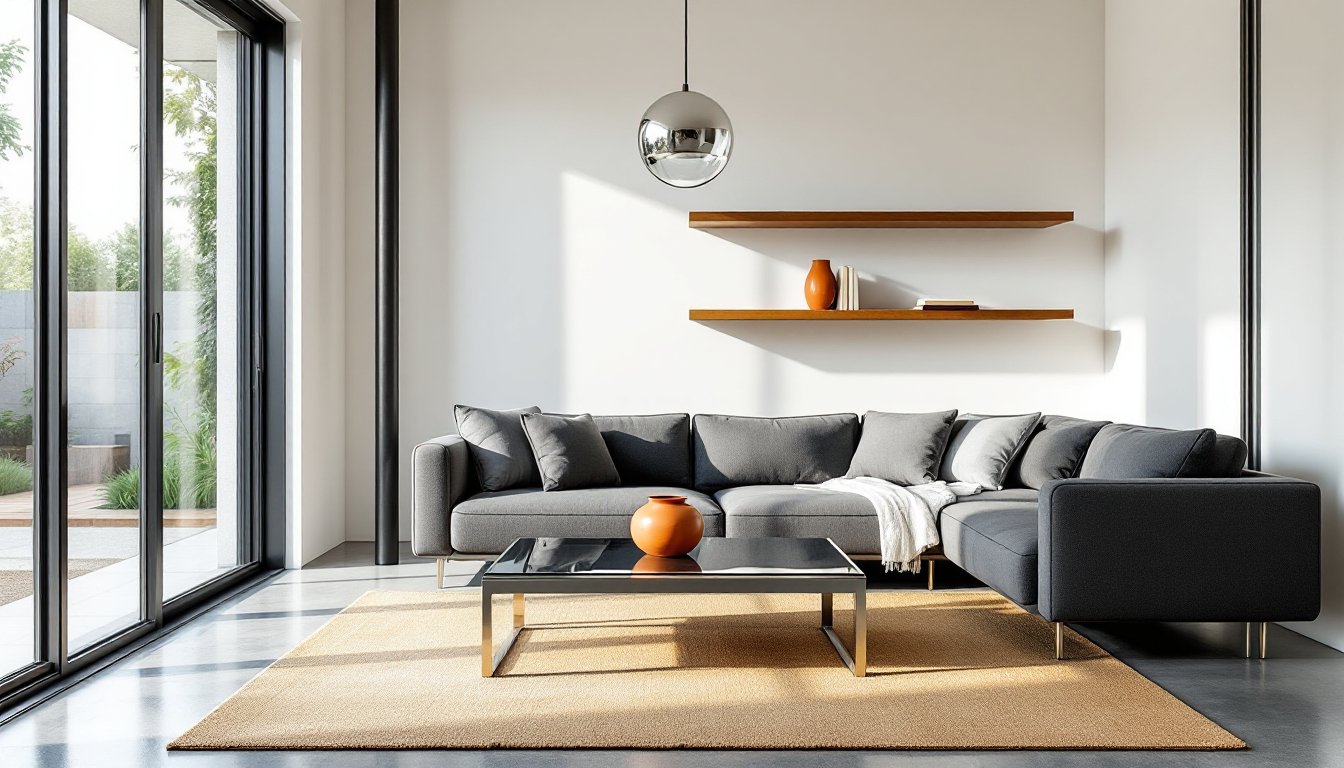
Remove or minimize baseboards and door casings to 1×2 or 1×3 flat stock. Paint walls and trim the same color to reduce visual breaks. Install a low-profile, platform-style sofa and a glass or wood coffee table with clean lines. Use a single large-format area rug (8×10 or larger) to anchor seating without chopping up floor space.
Kitchen:
Replace raised-panel cabinet doors with slab-front doors in wood veneer or thermofoil. Consider a waterfall-edge island using the same countertop material on sides and top. Integrate appliances with panel-ready fronts where budget allows. Swap out decorative tile backsplashes for large-format porcelain, glass subway tile, or a single slab of the counter material running up the wall.
Bedroom:
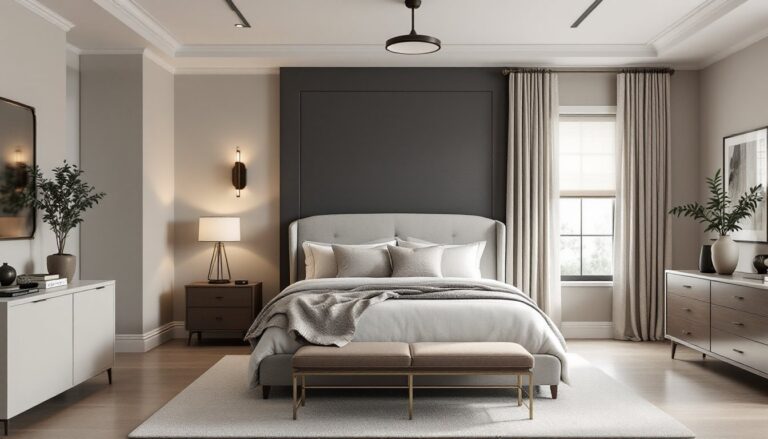
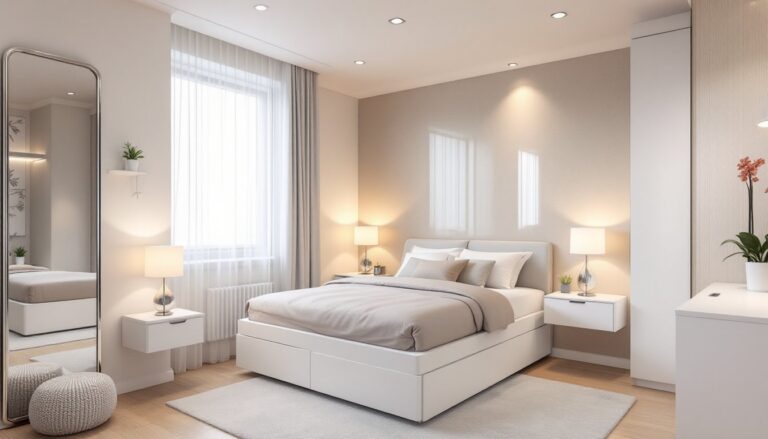
Choose a platform bed frame with no headboard or a simple upholstered panel. Install blackout roller shades for light control. Keep nightstands minimal, floating shelves or a single pedestal table. Skip the dresser if you have adequate closet space with built-ins. Spaces focused on furniture and architectural details often highlight platform beds and floating nightstands as signature modernist moves.
Bathroom:
Install a wall-hung vanity with a vessel or undermount sink. Use large-format porcelain tile (12×24 or larger) on floors and walls to minimize grout lines. Choose a frameless glass shower enclosure. Replace builder-grade chrome fixtures with matte black or brushed nickel single-handle faucets.
Home office:
Build a floating desk from a butcher block countertop or 3/4-inch hardwood plywood supported by steel brackets or a simple trestle base. Run cables through a desk grommet to keep surfaces clear. Use a task light with an adjustable arm in metal finish.
Common Mistakes to Avoid When Designing Modernist Interiors
Mixing too many materials. Limit yourself to three or four: wood, metal, glass, and one stone or concrete. Introducing tile, brick, fabric, and multiple wood species creates visual clutter.
Ignoring scale. Modernist furniture tends to sit low and wide. Pairing a low-profile sofa with a tall, narrow bookcase breaks the horizontal emphasis. Keep proportions consistent.
Skipping surface prep. Modernism’s clean lines reveal every flaw. Fill nail holes, sand smooth, and prime properly before painting. Use lightweight spackle for small holes, setting-type joint compound for larger repairs. Sand with 120-grit, then 220-grit for a smooth finish.
Over-accessorizing. One sculptural vase beats a cluster of tchotchkes. Curate deliberately. If it doesn’t serve a function or hold strong visual interest, store it.
Forgetting lighting layers. Modernist interiors need task, ambient, and accent lighting. A single overhead fixture won’t cut it. Install dimmer switches (compatible with LED bulbs if using those) to adjust mood.
Choosing trendy over timeless. Barn doors and shiplap lean rustic, not modernist. Rustic interior design occupies a different aesthetic camp. Stick to the principles: if it’s decorative rather than functional, it doesn’t belong.
Neglecting codes and permits. Structural changes, electrical work, and plumbing alterations typically require permits. Check local building department requirements before starting demo. Inspections protect resale value and safety.
Conclusion
Modernist interior design rewards those willing to pare down, plan carefully, and invest in quality materials over decorative add-ons. The style’s emphasis on function and honest materials aligns well with DIY skillsets, most projects involve removal, simplification, and thoughtful finishing rather than complex fabrication. Whether tackling a single room or a whole-home refresh, sticking to the core principles of clean lines, open space, and restrained palettes delivers timeless results that won’t feel dated in a decade. For ongoing home design inspiration and project ideas, explore resources that highlight modernist case studies and material applications.