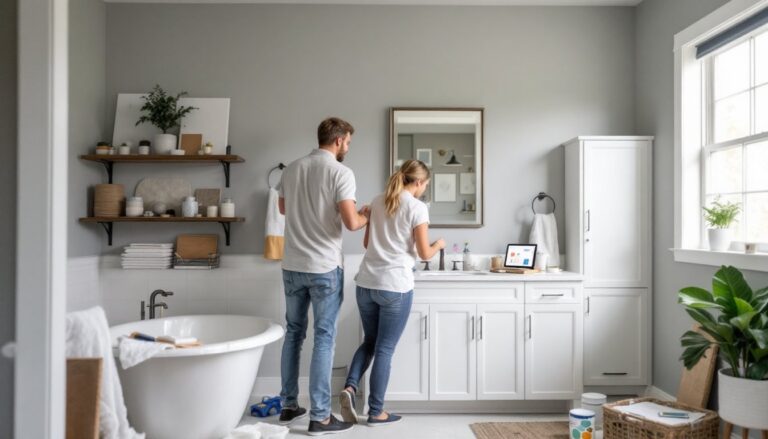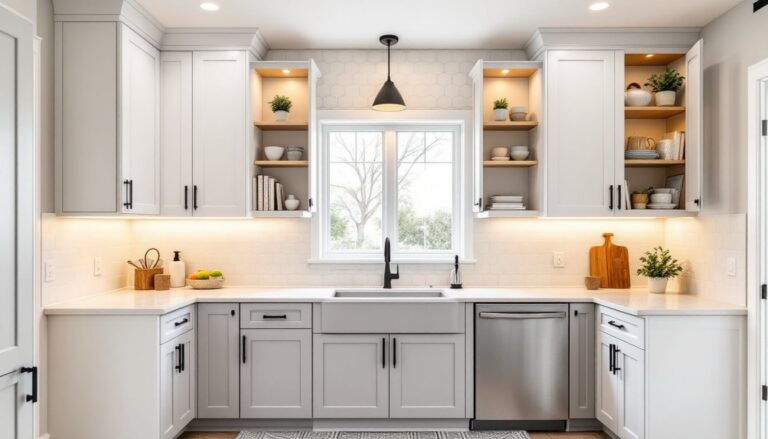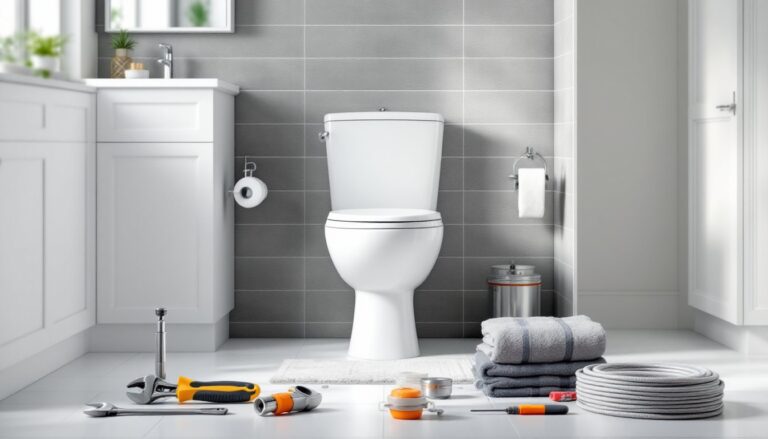

A small bathroom doesn’t need a contractor’s invoice or six-month timeline. Whether you’re tackling a DIY bathroom renovation, remodel, or reno for the first time, the key is smart planning and focusing your money where it counts most. Paint, lighting, hardware, and fresh tile caulking deliver the biggest visual payoff without draining your wallet. This guide walks you through a practical DIY small bathroom renovation strategy, identifying what truly needs updating, setting a realistic budget, and executing changes you can handle yourself while knowing when to call a pro.
Key Takeaways
- A DIY small bathroom renovation can deliver 80% visual impact by prioritizing paint, lighting, hardware, and fresh caulking instead of full structural overhauls.
- Cosmetic refreshes cost $150–$500, moderate updates run $500–$3,000, and realistic timelines for weekend work range from 4–8 weeks depending on scope.
- Start your DIY bathroom renovation by assessing what’s functional versus damaged—handle minor fixes yourself like loose caulk, but defer structural and major plumbing work to licensed contractors.
- Replace fixtures and hardware strategically: new vanities ($200–$600), faucets ($100–$300), and LED lighting ($50–$150) deliver the highest visual ROI with minimal complexity.
- Invest time in prep work for painting and re-caulking—use bathroom-grade mildew-resistant paint, satin or semi-gloss finishes, silicone caulk where tile meets walls, and allow proper drying time between coats.
- Maximize storage in small bathrooms with over-toilet shelving ($50–$150), floating shelves above toilets or mirrors, and drawer organizers to reduce clutter and make the space feel larger.
Plan Your Bathroom Renovation on a Budget
Assess What Needs Updating
Start by listing every element in your bathroom: vanity, faucet, toilet, tub or shower, tile, flooring, lighting, mirror, storage, walls, and ceiling. Walk through with a notebook and be honest about what’s working and what isn’t.
Next, scan for damage. Soft spots in the subfloor, water stains around the tub, mold in grout lines, and peeling caulk are red flags. Minor issues like loose caulk or surface stains are DIY-friendly fixes. Structural problems like rotted framing or major plumbing/electrical work belong with a licensed contractor.
A smart approach: keep what’s functional and serviceable (flooring, vanity base, or existing tile), and refresh everything else. Swapping a faucet, painting walls, replacing a mirror, and updating lighting often delivers 80% of the visual transformation at a fraction of a full gut rehab.
Set a Realistic Budget and Timeline
Cost scales directly with scope. A cosmetic refresh, paint, hardware, new shower curtain, and accessories, runs roughly $150–$500. A moderate update adding a new vanity, toilet, some tile work, and lighting fixtures lands in the $500–$3,000 range. A full DIY bathroom remodel with major structural or mechanical work typically runs several thousand dollars, and contractor quotes often triple that.
Build a task list: demolition, drywall repair, painting, tiling, fixture installation. Assign each task a realistic duration. Drywall mud needs 24 hours between coats. Grout and caulk cure overnight. Tile adhesive sets in 24–48 hours. Paint needs 4 hours between coats and 24 hours before humidity exposure. Add 10–20% contingency for material delays, unexpected discoveries, or rework.
If you’re doing this on weekends, a modest bathroom refresh takes 4–8 weeks. Budget time carefully, rushing leads to mistakes.
Update Fixtures and Hardware for Maximum Impact
Replacing fixtures is one of the highest-ROI changes. Start with the vanity: a fresh paint job on existing cabinetry or a budget-friendly replacement vanity ($200–$600) instantly modernizes the room. Pair it with a new faucet: mid-range brass or brushed nickel models cost $100–$300 and come with installation templates.
Swap cabinet hardware. New knobs and pulls (often $2–$8 each) cost pennies but look intentional. Coordinate finishes, if your faucet is brushed nickel, match cabinet handles and towel bars to that metal.
Lighting transforms a bathroom faster than almost anything else. Replace a dated ceiling fixture or add a DIY bathroom remodel vanity light with adjustable-brightness LEDs ($50–$150). Check that electrical boxes are properly rated for moisture zones (per NEC guidelines, lights within 5 feet of tub edges need GFI protection).
Add or replace a mirror: frame styles vary wildly ($40–$300), and a fresh mirror with good lighting beats any makeup advertisement. Consider low-flow fixtures: a 3 GPM showerhead and 1.28 GPF toilet reduce water use while cutting utility bills. Installation is straightforward, shut off valves, swap parts, and caulk or seal as needed.
Check that all hardware is properly fastened. Loose soap dispensers and towel bars signal poor maintenance.
Refresh Paint, Tile, and Wall Treatments
Paint is the backbone of any budget renovation. Use bathroom-grade paint with mildew-resistant primers (Benjamin Moore Aura, Sherwin-Williams Duration, or similar). Flat finishes hide imperfections but don’t clean well: satin or semi-gloss handle humidity and splashing better.
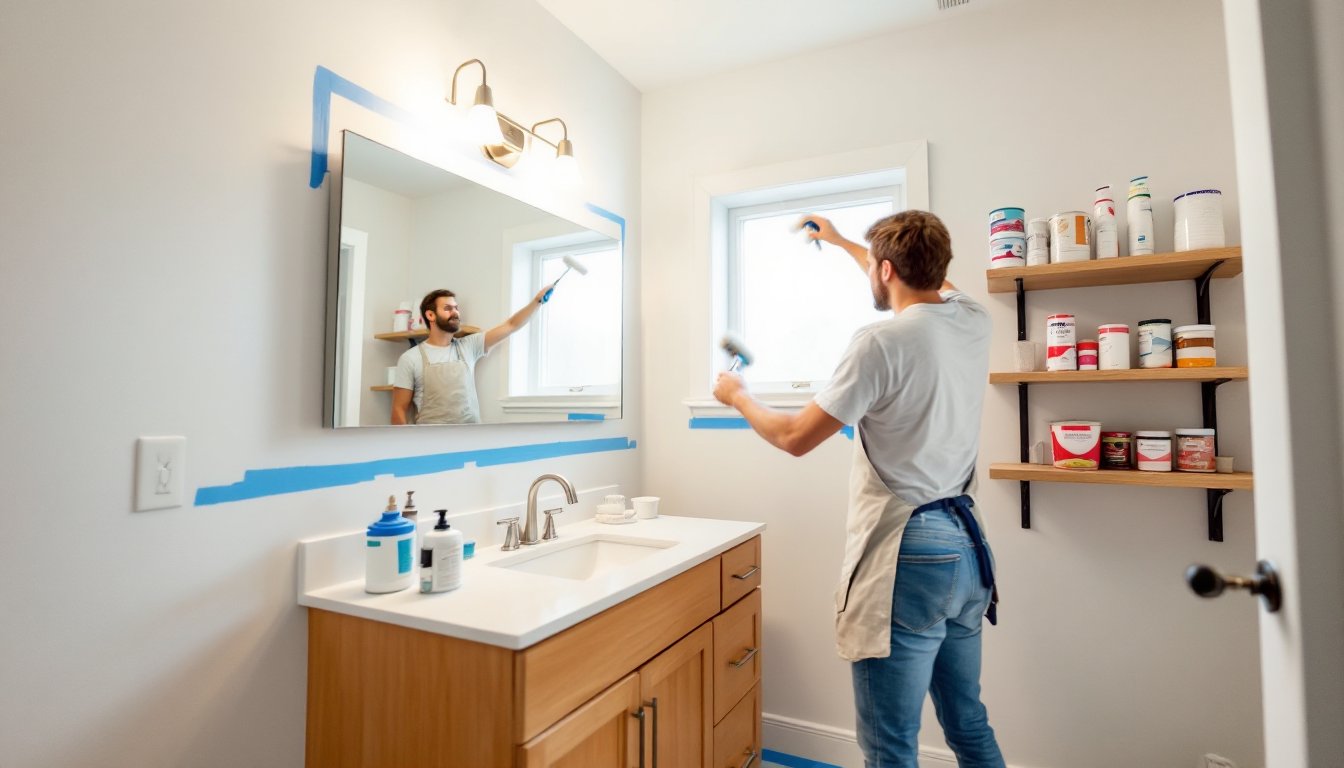
Prep is non-negotiable. Caulk trim seams and corners with silicone caulk rated for bathrooms. Fill nail holes and damage with spackle, sand smooth with 120-grit sandpaper, and prime before painting. Two coats of quality bathroom paint provide coverage per gallon specs (usually 350–400 sq. ft. per gallon). Use painter’s tape on trim and baseboards, it prevents slop and keeps lines crisp.
For tile work, assess what you have. If existing tile is structurally sound but grout is stained or failing, clean it with a grout brush and bleach solution, then re-grout. Epoxy grout costs more than cement-based but resists stains and mildew. Use the correct grout joints for your tile size (typically 1/16″ to 1/4″): wider joints hold more moisture and invite failure.
Re-caulk where tile meets walls or fixtures using 100% silicone caulk (not grout). Apply smooth beads with a caulk gun, tool with a wet finger, and let cure per manufacturer specs before shower use. If retiling small areas, match existing grout color first, mismatches stand out. A bathroom renovation done on budget often keeps existing tile and focuses on refreshing joints and caulk.
Wallpaper or accent walls work if moisture is managed. Avoid high-humidity zones directly above tubs. Peel-and-stick options reduce installation headaches but may not adhere long-term in wet areas.
Improve Storage and Organization
Small bathrooms feel larger when clutter is hidden. Storage solves that affordably. Over-toilet shelving units ($50–$150) fit in tight corners and don’t require walls. A vanity with drawers ($200–$500) beats an open pedestal sink for keeping daily items within reach and out of sight.
Add floating shelves (12–18″ deep) above the toilet or beside the mirror. Use adjustable brackets rated for wall type, drywall anchors hold 15–25 lbs per anchor when installed correctly. Space shelves 12–16 inches apart for storage items, and ensure they don’t block door swing or towel bar access.
Organize drawers and shelves with baskets, drawer dividers, and clear containers. Label supplies and rotate stock, bathroom clutter looks worse than kitchen clutter because moisture and humidity make mess feel damp. Install hooks for robes and towels: they’re cheap, multipurpose, and save counter space.
Water exposure matters. Don’t store electronics or important documents near the sink or tub. Keep small space interior design principles in mind: vertical storage, open shelves where visibility helps (like open shelving for rolled towels), and concealed storage for clutter.
Measure twice before fastening shelves. Locating studs with a stud finder ensures shelves hold weight safely. If studs aren’t positioned where you want shelves, use heavy-duty drywall anchors and confirm weight limits.
Conclusion
A DIY small bathroom renovation succeeds through smart prioritization and honest assessment of your skills. Focus your budget on high-impact, low-cost changes, fresh paint, updated fixtures, new hardware, and caulking refresh. Keep structural and mechanical work simple or defer to professionals. Plan methodically, allow time for drying and curing, and don’t skip prep. Thousands of homeowners complete modest bathroom renos in under 8 weeks on budgets under $2,000. Yours can too, with patience and clear-eyed scope management.