
Taking on a DIY bathroom renovation doesn’t require a contractor’s budget or months of downtime. Homeowners tackling their own bathroom remodel can save anywhere from 30% to 50% on labor costs, the biggest line item in any professional job. But cutting costs doesn’t mean cutting corners. A successful DIY bathroom reno demands realistic budgeting, honest self-assessment of skill level, and clear understanding of where money actually goes. This guide walks through the real numbers behind a bathroom remodeling project, breaks down material costs, identifies essential tools, and shares proven strategies for stretching a renovation budget without sacrificing quality or safety.
Key Takeaways
- DIY bathroom remodeling costs range from $3,000 to $8,000 for a full renovation, with homeowners saving 30% to 50% on labor compared to hiring contractors.
- Flooring and fixtures represent the largest budget items at 25–40% each, so prioritize spending on visible finishes and daily-use items like quality faucets and tile.
- Smart tool investment—renting specialty equipment like wet saws instead of buying—can significantly reduce overall project costs while maintaining quality.
- Hiring licensed professionals for plumbing, electrical, and structural work protects safety and code compliance, offsetting any upfront labor savings.
- Breaking your bathroom renovation into phases spreads costs over time, improves your skills gradually, and allows you to tackle learning curves one project at a time.
Average Costs for DIY Bathroom Remodeling Projects
A full DIY bathroom remodel, one that includes new flooring, walls, fixtures, and finishes, typically ranges from $3,000 to $8,000 depending on scope, materials chosen, and existing conditions. Small, cosmetic updates (paint, hardware, lighting) can cost as little as $500 to $1,500. Mid-range projects (new vanity, toilet, flooring, fresh paint) land around $2,000 to $4,000. Complete gut renovations with structural work, plumbing moves, or tile work creep toward $5,000 to $10,000+.
The key variable isn’t labor, you’re doing that, it’s material quality and scope. A modest 5×8 foot bathroom with basic updates costs far less than a 10×12 foot master bath with heated floors and marble tile. Geographic factors matter too. Materials cost more in remote areas, and local code requirements (ventilation upgrades, waterproofing standards, electrical work) can push costs up.
Before committing, take honest stock of your project. Is this cosmetic refresh or structural repair? Can you handle plumbing, electrical, and tile work yourself, or will permits and licensed pros be necessary? That distinction directly impacts your final bill and timeline.
Key Materials and Fixtures: Where Your Budget Goes
Understanding cost allocation helps prioritize spending. In a typical bathroom remodel, flooring and wall finishes eat 25–35% of the budget, fixtures and hardware consume 30–40%, and paint, hardware, and miscellaneous finishes take the remaining 25–30%.
Flooring, Walls, and Paint Options
Flooring is the single biggest material expense. Ceramic or porcelain tile costs $1.50 to $5 per square foot (material only), plus thinset, grout, and sealant. Vinyl plank flooring runs $1 to $3 per square foot and installs faster, a real advantage if you’re doing it yourself. Naturally, a small bathroom needs less material than a large one, so a 30-square-foot bathroom bathroom floor in budget tile might cost $200–$300, while mid-range porcelain runs $400–$600.
Wall finishes vary widely. Paint (the cheapest option) costs $20–$50 per gallon: bathroom paint requires mildew-resistant or semi-gloss formulas. Plan 1.5 gallons for an average bathroom. Tile accents or a full tile surround multiply costs quickly, $3 to $8 per square foot depending on material and complexity. Beadboard wainscoting (a cheaper, charming alternative) runs $1 to $3 per linear foot and works well in cottage-style baths.
Paint preparation matters more than paint itself. Surface prep, primer, and two coats determine longevity. Skip it, and you’re repainting in two years.
Fixtures and Hardware Essentials
Vanities anchor the budget here. A basic 24-inch single-sink vanity with laminate top costs $150–$400: solid wood or better-quality finishes jump to $400–$1,200. Custom-built vanities exceed $1,500 easily. If you’re keeping an existing vanity and just replacing the countertop, quartz or solid-surface tops cost $300–$800 installed (or $100–$300 DIY material only).
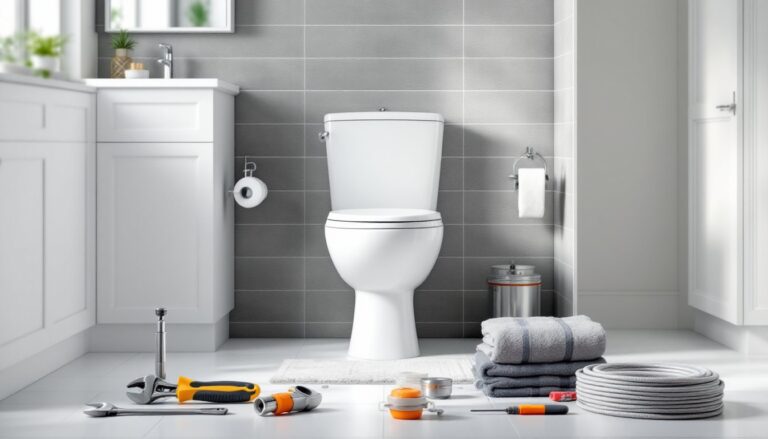
Toilets range from $100 (basic two-piece) to $500+ (dual-flush or smart models). Most DIYers handle toilet removal and installation without trouble, it’s mostly bolts, wax ring, and supply line work.
Faucets and fixtures include sink faucets ($50–$300), shower faucets ($75–$400), and mirrors/lighting ($50–$200 each). These are visible, used daily, and worth investing in quality, cheap faucets leak within months.
Shower surrounds vary wildly by choice. Acrylic shower kits cost $300–$800 and install quickly (glue, caulk, done). Tile surrounds run $800–$2,000+ and demand waterproofing, substrate, and grouting skill. A complete bathroom remodel guide breaks down fixture selection in detail.
Tools and Equipment You’ll Need to Invest In
Smart tool investment separates a smooth DIY project from frustrating guesswork. You don’t need every specialty tool, but certain essentials make a real difference. If you own a power drill/driver and circular saw, you’re ahead. If not, budget $150–$300 to buy entry-level versions or $30–$60 to rent for the project duration.
Critical tools for bathroom work:
- Tile cutter or wet saw ($40–$200 to buy, $20–$40 daily rental), essential for tile cuts: a wet saw prevents chipping and keeps edges clean.
- Oscillating multi-tool ($50–$150), invaluable for cutting around fixtures and pipes: saves countless hours.
- Grout float and grout sponges ($15–$30), cheap but non-negotiable for tile grouting.
- Leveler, tape measure, and square ($30–$50 total), you’ll use these constantly: buy quality.
- Pry bar and caulk gun ($20–$40), basics that pay for themselves immediately.
- Safety gear: goggles, gloves, dust mask, ear protection ($30–$50), non-negotiable. Tile dust causes respiratory harm: drywall dust clouds everywhere: power tools demand eye protection.
Renting specialty tools (tile saw, nail gun, scaffolding) often makes sense for one-off projects. Compare rental costs against purchase, if you’re renting a $200 wet saw for $40 a day, two days of rental costs less than buying.
A bathroom renovation resource guide outlines tool needs by project phase.
Money-Saving Strategies for Budget-Conscious DIYers
Cutting costs without cutting quality requires strategy, not just shopping around.
Buy materials strategically. Paint, tile, and fixtures go on sale seasonally, late winter sees bathroom sales, as do end-of-quarter clearances. Buy slightly more tile than needed (breakage happens): leftover tile sells online. Buying discontinued lines or floor samples saves 20–40% but limits replacements later, so use them on accent walls, not high-traffic floors.
Choose cosmetic over structural. Repainting, new hardware, and updated lighting transform a bathroom for $500–$1,500 with zero permits. Moving plumbing, rewiring electrical, or removing load-bearing walls requires licensed pros and permits, costs jump to $2,000–$5,000+ just for those systems. Stick to the walls and fixtures you have when possible.
DIY what you can handle, hire out the rest. Painting and basic tile work are forgiving: plumbing and electrical carry code requirements and safety risks. If you’re unsure, that’s your answer, hire it. One mistake in wiring or a water line costs more to fix than hiring a pro upfront. Resources like HomeAdvisor’s cost estimator and This Old House’s bathroom remodel pricing guide help identify where professional work is worth it.
Reuse what’s solid. If the tub surround, cabinets, or door are structurally sound, refinishing beats replacing. Reglazing a bathtub costs $300–$600 versus $1,500–$3,000 for a new one. Painting cabinets (with proper prep and primer) costs $150–$400 versus $800–$2,000 for replacement.
Plan phases. Full-gut DIY bathroom renovations are ambitious. Breaking work into phases, first year: flooring and paint: second year: fixtures and tile, spreads costs and lets you tackle learning curves one project at a time. Your skill (and confidence) improves each phase.
Measure twice, buy once. Ordering wrong materials wastes budget fast. Confirm all dimensions, tile quantity (add 10% for waste), and product codes before purchasing. Digital tools like room-planning apps help visualize layouts and catch mistakes before spending money.
Conclusion
A DIY bathroom remodel is achievable on a realistic budget, the key is honest planning and knowing your limits. Material costs for a mid-range bathroom renovation typically fall between $3,000 and $5,000, with savings multiplied by handling your own labor. Focus spending on items you touch daily (faucets, fixtures) and visible finishes (tile, paint), then trim costs on items hidden behind walls. Be willing to hire licensed professionals for plumbing, electrical, and structural work: that’s not skimping, it’s building a bathroom that functions safely and passes inspection. Start small, learn the process, and scale up. Your next DIY bathroom reno will be faster, smarter, and better.