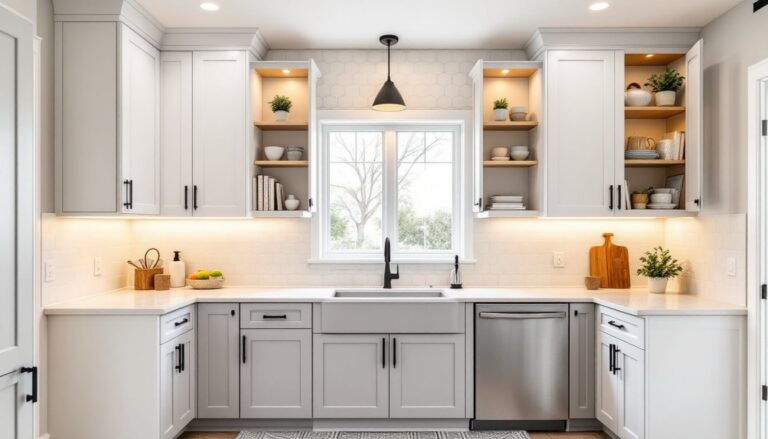


A DIY kitchen remodel can shave thousands off a contractor’s bill, but the final number on the receipt rarely matches the one homeowners scribbled on the back of a napkin. Materials creep up. A surprise behind the drywall eats into the contingency. The dishwasher hookup turns into a Saturday-long plumbing lesson. Knowing what a realistic kitchen remodel DIY cost looks like in 2026, before the first cabinet comes down, is the difference between a project that pays off and one that drags into next winter. Here’s the honest breakdown.
Key Takeaways
- A DIY kitchen remodel cost ranges from $5,000 to $25,000 for a typical 10×12 kitchen, with labor savings of 30–40% making the biggest difference compared to hiring a contractor.
- Cabinets, countertops, appliances, and flooring account for 80% of your budget, with cabinets alone consuming 30–40% of total spending.
- Smart cost-cutting strategies like keeping the existing footprint, refacing cabinets instead of replacing them, and buying display models can reduce expenses by thousands without sacrificing quality.
- Hidden costs including plumbing, electrical work, permits, dumpster rental, and tool rentals can easily add $1,000–$3,000 to your DIY kitchen remodel budget if not planned for upfront.
- Hire professionals for gas line work, panel-level electrical, quartz fabrication, and structural changes, while tackling demo, painting, flooring, and finish work yourself to maximize savings.
- Plan for a 15% contingency buffer and allow 2–4 months for completion, as DIY projects take significantly longer than professional crews (3–6 weeks) but deliver comparable results at roughly half the cost.
Average Cost of a DIY Kitchen Remodel
For a typical 10×12 kitchen, a DIY kitchen remodel in 2026 lands somewhere between $5,000 and $25,000, depending on scope, finishes, and how much of the labor the homeowner takes on personally. That’s a wide spread, but the variables are real: stock cabinets versus semi-custom, laminate versus quartz, keeping the existing layout versus moving plumbing.
Labor typically accounts for 30–40% of a professional remodel, so doing the work in-house is where the real savings live. Materials, but, cost roughly the same whether a homeowner or a contractor buys them.
Small, Mid-Range, and Full Gut Renovation Estimates
- Cosmetic refresh ($2,000–$6,000): Paint, cabinet refacing or re-hardware, new faucet, peel-and-stick backsplash, light fixtures.
- Mid-range remodel ($8,000–$15,000): New stock cabinets, laminate or butcher-block counters, mid-tier appliances, LVP flooring, updated lighting.
- Full gut renovation ($18,000–$25,000+): New layout, semi-custom cabinets, quartz counters, tile floor, full appliance package, possible permit work.
Industry data on average DIY remodel pricing tracks closely with these ranges, though regional labor and material costs swing numbers up or down by 15–20%.
Where Your Money Actually Goes: Cost Breakdown by Category
Most homeowners are shocked at how quickly cabinets and counters eat the budget. The 80/20 rule applies here, a handful of categories drive the majority of the spend.
Cabinets, Countertops, Appliances, and Flooring
- Cabinets: 30–40% of budget. Stock cabinets run $80–$200 per linear foot: semi-custom $150–$400. RTA (ready-to-assemble) units save 20–30% but require patience and a square framing square.
- Countertops: 10–15%. Laminate at $20–$50/sq ft, butcher block $35–$75/sq ft, quartz $50–$120/sq ft installed. Quartz typically requires a fabricator, it’s not a true DIY material.
- Appliances: 15–20%. A solid mid-range package (fridge, range, dishwasher, microwave) runs $2,500–$5,000.
- Flooring: 5–10%. Luxury vinyl plank (LVP) costs $2–$5/sq ft and is forgiving for first-timers. Tile is cheaper per square foot but demands underlayment prep and a wet saw.
For a deeper look at material trade-offs, this complete kitchen renovation guide walks through layout decisions that affect every line item below.
Plumbing, Electrical, and Hidden Material Costs
This is where DIY budgets quietly bleed. Expect $300–$1,500 for plumbing rough-in materials if relocating a sink, plus permit fees in most jurisdictions. Electrical upgrades, adding a dedicated 20-amp circuit for a microwave or under-cabinet lighting, fall under the NEC and typically require permits and inspection. Codes vary, and in many areas a licensed electrician must tie into the panel.
Hidden costs that catch DIYers off guard:
- Shims, screws, caulk, primer, sandpaper: $200–$500
- Dumpster rental: $300–$600
- Tool rentals (tile saw, miter saw, nail gun): $150–$400
- Drywall patching after demo: $100–$300
DIY vs. Hiring a Pro: How Much You Really Save
A full-service contractor for a mid-range kitchen typically charges $25,000–$45,000 for the same project a determined homeowner could complete for $12,000–$18,000. That’s a 40–55% savings, but it’s not free money.
The trade-off is time. A contractor crew finishes a kitchen in 3–6 weeks. A weekend DIYer should plan on 2–4 months, sometimes longer if cabinets are back-ordered or the rough plumbing fails inspection the first time. Detailed comparisons of labor versus material costs show labor alone often accounts for $15,000+ on a pro job.
Where DIY makes sense:
- Demo, painting, flooring, cabinet install, backsplash, hardware
- Appliance hookup (for standard 120V plug-in units)
- Trim, caulking, and finish work
Where hiring out usually pays off:
- Gas line work (almost always requires a licensed plumber)
- Panel-level electrical
- Quartz or granite fabrication and installation
- Moving load-bearing walls (structural engineer + permit territory)
The same logic applies to other rooms, homeowners planning a budget bathroom renovation will see a similar 40–50% savings curve when doing finish work themselves.
Smart Ways to Cut Costs Without Sacrificing Quality
Cutting corners on prep work or materials usually shows up in year two. Cutting cost through smarter sourcing and scope decisions doesn’t.
Keep the existing footprint. Moving the sink five feet costs $800–$2,000 in plumbing alone. Keeping appliances and the sink in place preserves the rough-ins and avoids most permit triggers.
Reface instead of replace. If the cabinet boxes are structurally sound, new doors, drawer fronts, and hardware run $1,500–$4,000 versus $6,000+ for full replacement.
Buy display models and floor stock. Big-box stores and local cabinet dealers discount discontinued lines 30–50%. The same applies to scratch-and-dent appliances, a small dent on the side panel disappears once the fridge slides into its cabinet bay.
Mix high and low. Splurge on the one element that gets touched every day (a quality faucet, a quartz island top) and save on secondary finishes. Curated sources like Remodelista’s design sourcebooks are useful for spotting which materials hold visual weight and which don’t.
Acclimate flooring and let caulk cure. LVP needs 48 hours in the room before install. Skipping this causes buckling, and a do-over erases any savings. The same prep discipline applies to a DIY bathroom remodel, where subfloor moisture and tile underlayment make or break the finished result.
Safety gear isn’t optional. Budget $50–$100 for safety glasses, N95 masks, knee pads, and hearing protection. Demo dust often contains old adhesives, lead paint (pre-1978 homes), and silica from mortar.
The Bottom Line
A DIY kitchen remodel cost in 2026 is less about the sticker price of cabinets and more about how honestly a homeowner scopes the project upfront. Plan for a 15% contingency, pull permits where required, and hire out the work that involves gas, panels, or load-bearing changes. Done right, a DIY kitchen reno delivers contractor-grade results at roughly half the price, and a much better story.