

A DIY kitchen redo doesn’t mean tearing out walls or spending a fortune. Whether you’re refreshing outdated fixtures, updating countertops, or giving cabinets new life, a thoughtful kitchen renovation can happen on your timeline and budget. Homeowners tackling a DIY bathroom remodel or broader home renovation often overlook the kitchen’s potential for high-impact, low-cost improvements. This guide walks through practical strategies, from quick cosmetic wins to smart surface swaps, that deliver real results without contractor bills or months of disruption.
Key Takeaways
- A DIY kitchen redo can transform your space on a budget of $5,000 to $25,000+ depending on scope, from cosmetic updates to structural changes.
- Quick wins like paint, hardware swaps, and new light fixtures deliver dramatic visual impact in under $500 and require minimal time or tools.
- Cabinet refinishing costs 1/3 to 1/2 the price of full replacement and is the smartest approach if your cabinet frames and doors are structurally sound.
- Budget-friendly surface upgrades—vinyl plank flooring, epoxy countertop kits, and subway tile backsplashes—create high-impact updates without contractor bills.
- Careful planning, accurate measurement, and thorough prep work (especially sanding and priming) prevent costly mistakes and ensure your DIY kitchen redo delivers professional-looking results.
- Small kitchens benefit most from open shelving, light paint colors, reflective tiles, and vertical storage that maximize visual space and functionality.
Plan Your Kitchen Redo: Space and Budget Considerations
Before buying paint or hardware, measure twice and plan once. Start by identifying what bothers you most: lighting, storage, surface condition, or overall flow? Not everything needs fixing at the same time. A phased approach spreads costs and lets you test ideas before committing.
Set a realistic budget and prioritize. If your cabinets are solid but tired-looking, refinishing them costs less than replacement. If plumbing or electrical work is needed, that’s where contractor dollars go, and sometimes can’t be avoided. A typical DIY kitchen renovation budget ranges from $5,000 for cosmetic updates to $25,000+ for structural changes: your mileage depends on scope and material choices.
Making the Most of Small Kitchens
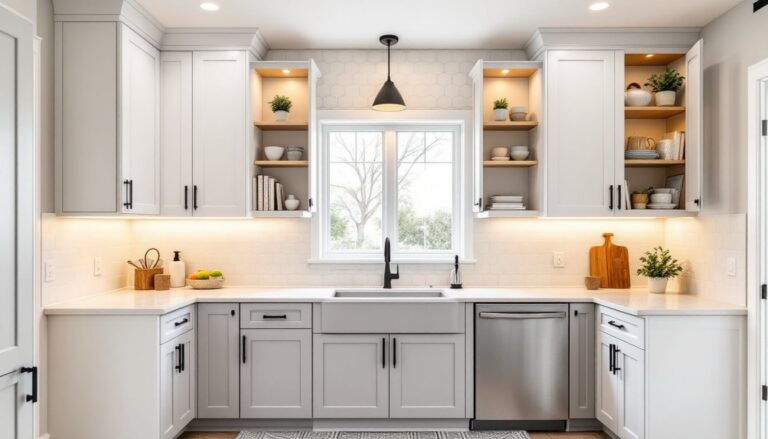
Small kitchens benefit most from strategic changes. Open shelving replaces upper cabinets to create visual space, though it demands organization discipline. Light paint (soft whites, pale grays, warm creams) reflects light and makes rooms feel larger than dark finishes do. Mirrors or reflective backsplash tiles amplify natural light without structural changes. Consider vertical storage: wall-mounted spice racks, pegboards, or hook rails keep countertops clear and usable. Recessed lighting or under-cabinet LED strips cost under $200 installed and solve dim corner problems instantly.
Quick Wins: Paint, Hardware, and Fixtures
Paint is the fastest, cheapest transformation in any kitchen redo. High-quality kitchen paint resists moisture and grease better than standard interior paint: semi-gloss or satin finishes (not flat) wipe clean and last longer. Two coats of paint on walls cost $100–$200 in materials: cabinets take a bit more prep but return huge visual impact.
Cabinet hardware swaps feel like an entirely new kitchen. Remove old knobs or pulls and drill matching holes, then install new hardware in brushed nickel, matte black, or brass finishes ($50–$150 for a full set). This 30-minute project surprises homeowners with results.
Faucets and sink fixtures are visible workhorses. Modern pull-down or pull-out spray faucets ($80–$300) look current and function better than older fixed-spout designs. Turn off water at the shutoff valve under the sink, disconnect supply lines, and install the new faucet following manufacturer instructions. Most jobs take an afternoon and require only an adjustable wrench and plumber’s tape.
Replacing light fixtures lightens the whole room. Pendant lights over islands, recessed downlights, or a simple flush-mount ceiling fixture ($40–$200 each) are DIY-doable if you’re comfortable with basic wiring. Always turn off power at the breaker, test wires with a voltage detector, and follow the fixture instructions. If you’re uncertain about electrical work, hire a licensed electrician, it’s not where to cut corners.
Budget-Friendly Surface Updates
Countertops eat up renovation budgets fast. Laminate, butcher block, and concrete are affordable alternatives to granite or quartz. Laminate costs $10–$20 per square foot installed and offers endless colors, though it scratches more easily. Solid-surface materials like Corian run $40–$65 per square foot and resist stains better.
For a truly DIY approach, consider refinishing existing countertops. Epoxy countertop kits ($150–$400) let you coat worn laminate or concrete with durable, customizable finishes. Prep surfaces thoroughly, sand, clean, and prime, then apply epoxy per kit instructions. The result won’t look high-end, but it bridges the gap between “tired” and “updated” for less than $500.
Backsplash tile transforms the wall behind the stove and sink without major demo. Subway tile, mosaics, or stone backsplash ($10–$30 per square foot) installs over existing drywall if it’s clean and dry. Spread thin-set mortar, press tiles flush, grout between joints, and seal grout in kitchens (moisture is relentless). A 40-square-foot backsplash costs $300–$800 in materials and takes a weekend.
The team at The Kitchn shares countless examples of budget-friendly kitchen ideas that prove cosmetic updates deliver the most bang for your buck.
Flooring and Backsplash Solutions
Flooring is a major visual anchor and heavy wear zone. Vinyl plank flooring (LVP) costs $1–$4 per square foot, installs without glue (click-lock systems), and tolerates moisture better than laminate. It won’t feel exactly like wood or stone, but modern LVP mimics both convincingly. Lay underlayment first to dampen sound and protect the subfloor, then click planks together in staggered rows. A kitchen typically takes one weekend.
Tile flooring ($3–$10 per square foot) offers durability and easy cleanup. Large-format tiles (12×24 inches or larger) feel more modern and require fewer grout lines. Grouting is the tedious part: work systematically, keep grout bags moist for 48 hours so they cure properly, and seal grout in kitchens (water and dirt are constant).
Backsplash and flooring work best done before cabinet refinishing or painting walls, it’s messy, and dust settles everywhere. If you’re hesitant about tiling, many tile shops offer installation services at reasonable rates, especially for straightforward applications.
Budget-focused remodelers often reference cost-conscious kitchen ideas that prioritize high-impact areas like backsplash and countertops while deferring major appliance or cabinet replacement.
Refresh Cabinets Without Full Replacement
Cabinet replacement can run $10,000–$40,000: cabinet refinishing costs 1/3 to 1/2 that amount. If your cabinet frames and doors are sound, refinishing is the smartest DIY kitchen redo.
Cabinet painting starts with honest assessment. Are hinges rusted? Are shelves sagging? Fix those first. Then sand all surfaces with 120-grit sandpaper to dull the finish, clean off dust with a tack cloth, and apply primer (shellac-based primers block stains and adhesion issues better than latex). Two coats of cabinet paint (semi-gloss or satin) go over primer. Work in a well-ventilated space, fumes are real, and use a foam roller or angled brush for smooth coverage. Budget 2–3 weeks for drying between coats. Doors off hinges dry faster and paint more evenly than doors hanging.
Cabinet refacing is a hybrid approach: new doors and drawer fronts replace old ones, but the frame stays. Refacing kits ($200–$600) are far cheaper than new cabinetry and yield professional-looking results. Order doors pre-finished or stain them yourself. Installation involves removing old doors, transferring hinges, and hanging new ones, straightforward if your original cabinet boxes are square.
Open shelving removes upper cabinet doors entirely, creating visual airiness in small kitchens. This works if you’re willing to keep shelves organized and free of clutter (open shelves show dust). Remove doors and hinges, patch screw holes, and paint or stain the interior walls. It’s the quickest visual change, though it demands ongoing neatness.
A detailed DIY kitchen renovation guide covers refinishing steps, material selection, and sequencing your project to avoid bottlenecks.
Conclusion
A DIY kitchen redo succeeds when you’re honest about skill, time, and scope. Quick wins, paint, hardware, lighting, deliver visible impact fast and cost little. Surface updates like backsplash and countertops take more effort but extend your timeline and budget across several phases. Cabinet refinishing or refacing sidesteps the expense of full replacement while breathing new life into tired kitchens. Start small, measure carefully, and don’t rush prep work. Most DIY mistakes trace back to skipped sanding, incomplete priming, or choosing cheap materials that fail fast. Your kitchen will look and feel substantially refreshed, on your schedule, within your means.